

























































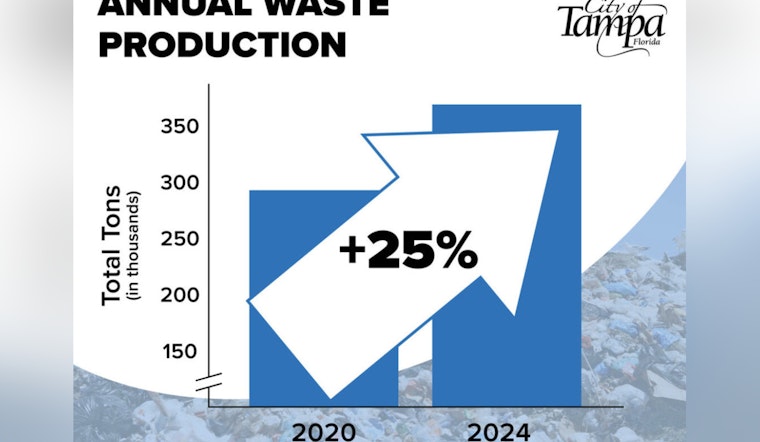
As Earth Month brings attention to environmental efforts, Tampa's waste production has notably increased, according to recent figures released by the city's Solid Waste and Environmental Program Management Department. Since 2020, there's been about a 25% spike in the amount of garbage processed by the McKay Bay Waste-to-Energy Plant, a significant uptick as the plant works tirelessly to convert trash into energy for local use. Servicing around 90,000 households and businesses, this facility has become an essential player in the city's battle against waste.
The department is actively promoting various waste reduction programs aimed at curbing this rise. During a statement shared by Tampa's official news release, Mayor Jane Castor emphasized the importance of individual efforts, saying, “Collectively, these mindful changes in daily habits can have a big impact on our environment and prolonging the lifespan of our waste processing infrastructure, which is critical for a healthy city.” Initiatives highlighted include backyard composting, bead reuse, and yard waste composting, all aimed at encouraging residents to engage in more sustainable waste management practices.
Food waste is currently the most substantial contributor to residential waste, constituting 22% of garbage content. The issue of wasted food is not just local but national, with the USDA estimating a loss of 30 to 40% of the food supply each year. Tips to combat this include buying only necessary amounts of food, utilizing leftovers, and composting kitchen scraps, simple steps that could significantly reduce the overall waste produced by households.
Previous year, the McKay Bay Waste-to-Energy Plant received a $100 million retrofit, securing its ability to manage the influx of garbage for the foreseeable future. Formally established in 1985, the facility now converts over two million pounds of waste every day into electrical energy, providing power to nearly 15,000 homes each month, as reiterated in the City of Tampa's announcement.





