

























































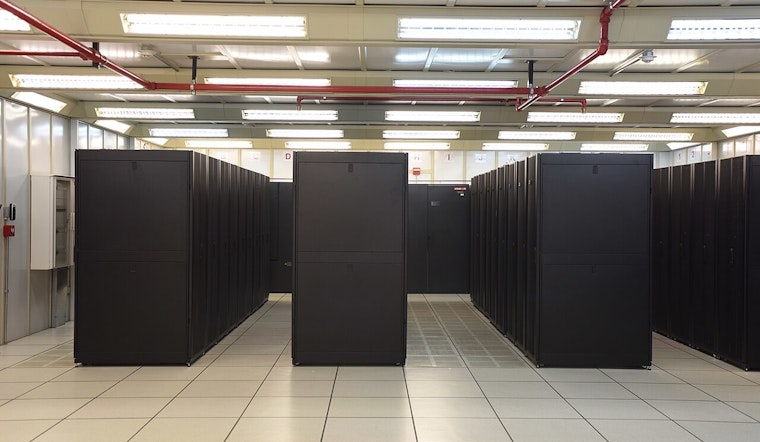
Amidst the burgeoning AI boom, Texas is grappling with a dire quandary: the AI industry's water consumption is on the rise, with data centers posing a significant strain on the state's water resources. As reported by CBS Austin, these technological powerhouses, pivotal in maintaining the state's competitive edge, are now implicated in a water usage crisis, leaving lawmakers and communities concerned about the long-term implications for an already drought-prone state.
AI expert Peter Voss, in an interview with CBS Austin, captured the public's awe, acknowledging the advanced capabilities of AI technologies such as ChatGPT, while raising the issue of sustainability in the face of innovation. "It's amazing what it can do," Voss said, setting the stage for the discourse on the inconspicuous, yet profound, toll these technological marvels may exert on the local water supplies. Mohammed Islam, an assistant professor at the University of Texas at Arlington, emphasized the gravity of the situation. "Oh yeah, it turns out to be very thirsty," Islam told CBS Austin, delineating the substantial water consumption of AI data centers, equivalent to the daily usage of 30,000 households over 100 days.
The growing number of data centers, particularly in regions like Hill Country, has prompted statewide concern. As indicated by the San Antonio Express-News, the developments have coaxed local water utilities into preemptive action, urging incoming facilities to curtail water usage from their inception. Bruce Alexander, the superintendent of the East Medina County Special Utility District, emphasized the criticality of water conservation in the region: "It’s taken some education." He described the ongoing efforts to manage data centers' water demands, ensuring that these gargantuan consumers do not jeopardize the existing supply.
In the face of such unprecedented demand, data center operators like Microsoft and new entrant Rowan Digital Infrastructure are endeavoring to be good corporate citizens. They are embracing innovations such as air-cooled chillers and zero-water cooling technologies to mitigate water usage. Microsoft, aiming to become "water-positive" by 2030, has redirected its focus toward these less water-intensive methods. "Microsoft is taking innovative steps to conserve water in our data centers," the company stated, outlining its commitment to the same. Rowan, on the flip side, plans a closed-loop chilling system, which intends to recycle the same water and prevent waste.
And yet, even as these companies forge ahead with reassurances of replenishment and reduced consumption, experts insist that a comprehensive understanding of water usage is imperative. Data centers are not required to disclose their water usage in the same way they do for power consumption to the Electric Reliability Council of Texas, which, according to Austin attorney Mike Nasi, poses a challenge for planning. "The public definitely deserves to know its increasing appetite for water," wrote Shaolei Ren, an associate professor of electrical and computer engineering, highlighting the importance of transparency in a statement obtained by the San Antonio Express-News. Texas lawmakers are juggling investment decisions in the state's water infrastructure, casting about for a strategy that accounts for these tech behemoths' thirst.





