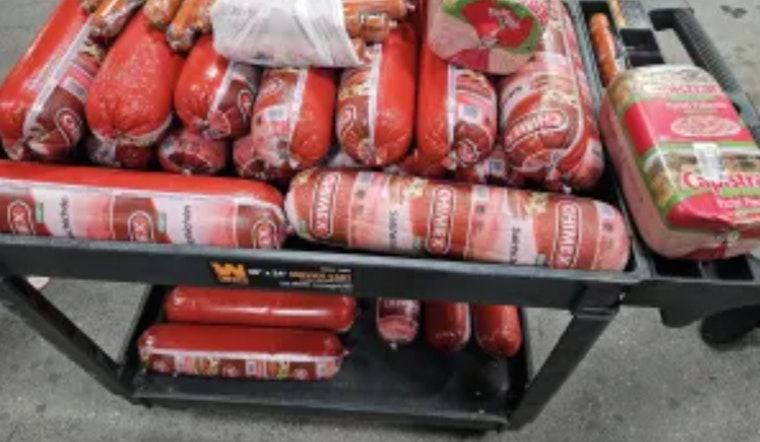
El Paso Customs and Border Protection Agriculture Specialists made a hefty seizure this past week, intercepting nearly 300 pounds of prohibited pork products at the Paso Del Norte international crossing. On Thursday, just before the evening rush, a man was caught with 25 rolls of bologna, two packages of ham, and 16 rolls of chorizo — all hidden in his vehicle, according to the official Customs and Border Protection release.
The driver, a 61-year-old male, was driving a 2024 Mazda CX-50 when he presented himself for inspection. CBP officers, having received a negative declaration for meats and other common agricultural contraband, spotted the goods underneath the car's floor mats. This led them to dig deeper, discovering the stockpile quickly thereafter. Despite the discovery, the man attempted to smoothly deny knowledge of the contraband, but to no avail.
A secondary inspection by CBP Agriculture Specialists revealed the extensive stash: 275 pounds of bologna, 17.6 pounds of pork ham, and seven pounds of pork chorizo. U.S. Department of Agriculture regulations dictate that such contraband be destroyed, which is precisely what happened to these pork products. It's a stark reminder of the seriousness with which U.S. officials take the potential threat of foreign animal diseases entering the country — diseases that could wreak havoc on domestic agriculture and the economy at large.
This incident wasn't the driver's first offense. In fact, it stands as his second botched attempt to smuggle bologna across the U.S. border, the first time having resulted in a $1,000 penalty after 30 rolls were found in his possession. "It is important that members of the traveling public clearly understand that pork products have the potential to introduce foreign animal diseases to the U.S.," said CBP El Paso Director Field Operations Hector A. Mancha. "Travelers should not try to cross pork products from Mexico to the U.S. If they are unsure, it is best for travelers to declare any items acquired abroad to help CBP stop the introduction of potentially harmful products," he pointed out in the Customs and Border Protection news release.
With the case now referred to the USDA Investigative and Enforcement Services, and civil penalties being considered, it's a clear sign officials are not about to turn a blind eye to such transgressions.