

























































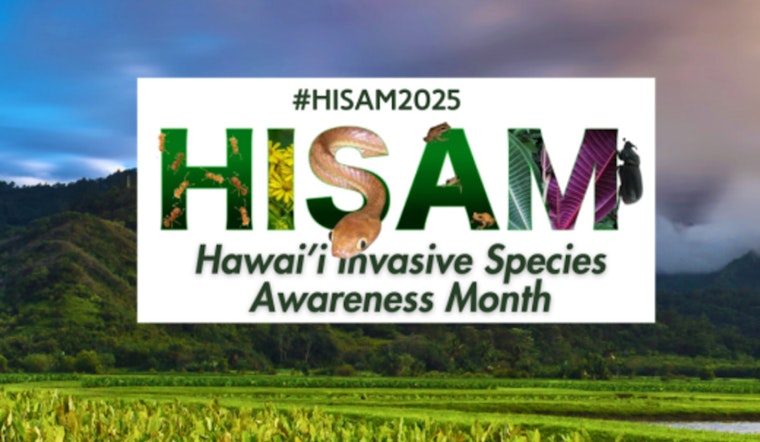
It's May, and in Hawaiʻi that means it's time to shine a spotlight on some unwanted residents – invasive species. For its eighth consecutive year, Hawaiʻi is marking Invasive Species Awareness Month, an initiative that aims to educate the public on the dangers these non-native organisms pose to the island's unique ecosystem.
Steered by the Hawaiʻi Invasive Species Council (HISC), which is a collaborative effort of the DLNR and the Hawaiʻi Department of Agriculture (HDOA), the campaign has lined up a plethora of activities for the local community. Among the offerings are free educational webinars that promise to readily engage and equip residents with knowledge on issues ranging from restoring habitats for endangered birds to quelling the raucous coqui frogs that have invaded Maui.
There's something particularly valuable about celebrating local heroes during this month. The HISC has rolled out its red carpet to honor those championing the battle against the invasive scourge – a threat so dire it's been proclaimed by the Hawaiʻi State Legislature as "the single greatest threat to Hawaiʻi’s economy, natural environment, people and visitors." "Every person has a role in Hawaiʻi’s biosecurity network. This month highlights the actions — large and small — that protect our islands from invasive pests," HDOA Chair Sharon Hurd told DLNR.
With the theme "What’s at Risk — from Mauka to Makai," the campaign underlines the connection between the islands' rich landscape and its endemic flora and fauna, reminding Hawaiians of the stakes. Residents are being encouraged to directly involve themselves in conservation efforts. Options include hunting invasive plants on Oʻahu's North Shore and working to restore critical bird habitats on Hawaiʻi Island. "Invasive species threaten everything we hold dear — from our wai to our ‘āina," DLNR Chair Dawn Chang told DLNR, reinforcing the island-wide call to action from the mountains to the sea.
HISC’s website has this month’s activity schedule and easy-to-access resources. It also links to webinars and local events where people can learn more and get involved in helping the environment.





