

























































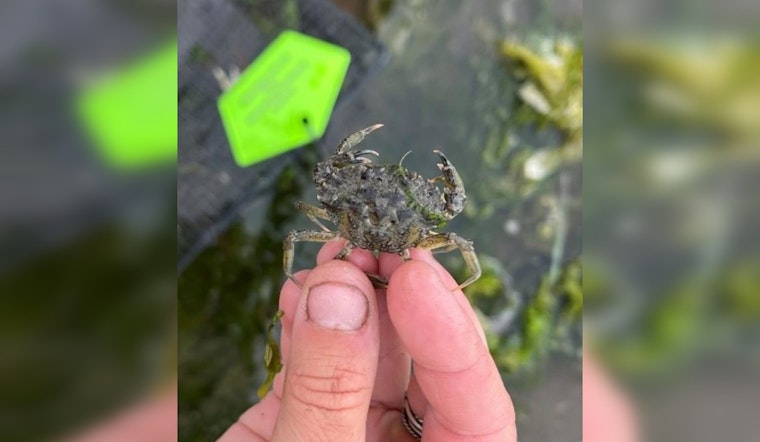
The Washington Department of Fish and Wildlife (WDFW) has again found itself grappling with the persistent issue of European green crabs (EGC), which have been caught in new areas between northern Hood Canal and Admiralty Inlet. This unwelcome finding came during an early detection trapping effort led by WDFW's Aquatic Invasive Species (AIS) Division, in collaboration with the Port Gamble S'Klallam Tribe, as per a recent news release by the department.
In a determined attempt to rapidly respond to this invasive species, crews captured two green crabs near Port Gamble and another in Races Cove, areas not previously known to host EGC. This marks the first time the crustaceans have been found in WDFW's South Central Puget Sound Management Area. Raquel Crosier, the state’s European Green Crab Emergency Incident Commander, said, "We designed our early detection monitoring to identify European green crabs in areas where they’re most likely to spread next." Crosier also expressed that, "While these new detections are disheartening, finding them early gives us the best chance at suppressing the population and preventing further spread into southern Hood Canal and Puget Sound, " as stated by the Washington Department of Fish and Wildlife.
As part of the ongoing response, WDFW and its co-managers are planning to significantly increase trapping efforts this summer to assess the infestation and remove as many crabs as possible. These efforts have been bolstered by state legislature funding, ensuring WDFW and partners can work to reduce the spread of this invasive species. "Thanks to continued funding from the Washington State Legislature, WDFW, along with our co-managers and partners, are working to reduce the spread of European green crabs and keep populations low enough to prevent harm to critical nearshore habitat, fisheries, shellfish aquaculture, and cultural resources," Crosier said, as noted by the WDFW.
For those on the lookout for EGC, the department advises reporting any sightings or findings through their online hub or via the Washington Invasive Species Council’s WA Invasives mobile app. Assistance and permits for crab control are available for those with properties where the crabs may encroach. Contact and more details can be sought by emailing [email protected], as per the Washington Department of Fish and Wildlife.
The struggle with EGC is not constrained by geopolitical boundaries, prompting the WDFW to also liaise with Canadian, Alaskan, Oregonian, and Californian authorities, aiming for a cohesive West Coast management strategy. The joint efforts highlight the complexity of managing such invasive species and the importance of a unified approach to preservation efforts.





