

























































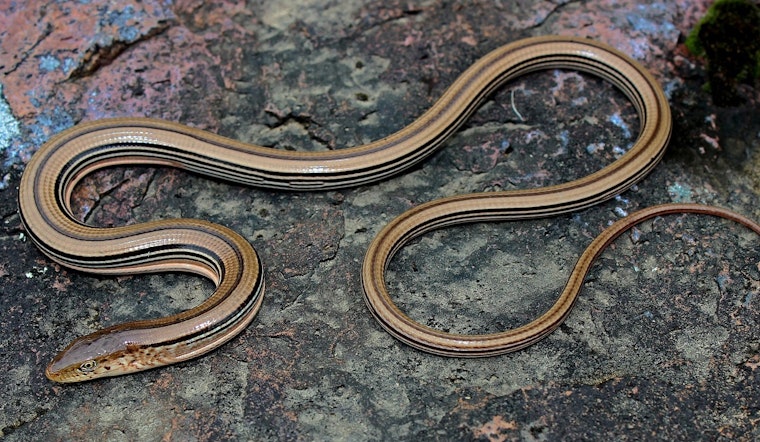
Residents of Monroe County might have to tread lightly, as a rare set of species are at the center of a new development by the Oakdale Electric Co-op. The project, confirmed by the Wisconsin Department of Natural Resources (DNR), involves running underground electric cables and installing transformers to power an FAA Radio Project, as detailed in a recent press release. While important to the region's infrastructure, it could have unintended consequences for local endangered wildlife, including the slender glass lizard and several species of terrestrial invertebrates.
The DNR has proposed an Incidental Take Permit for this initiative, paving the way for the Oakdale Electric Co-op's project to proceed despite potential risks to these creatures. The incidental taking refers to the unintentional loss of individual endangered or threatened animals or plants which luckily does not put the species' overall populations in jeopardy. Despite the fact that the project spans a 50-foot-wide, 5,200-foot-long stretch of Monroe County, the planned conservation measures hope to minimize any adverse effects, ensuring that power can reach where it's needed without significantly disrupting these species' chances of survival. The work will entail laying down 7.2 kV single phase underground electric cables, and adding to the mix, three new pad-mounted transformers and secondary cables are expected to wind their way to customer meter pedestals.
The details of the species in question, which include the endangered ottoe skipper, phlox moth, and the red-tailed prairie leafhopper among others, have been recognized as confirmed inhabitants near the project's planned location. In determining the potential impact, DNR staff has carefully assessed the situation, concluding that while some individuals might be taken incidentally the larger populations should remain stable. This conclusion follows careful deliberation by the DNR's specialists in the field.
As mitigation is a key aspect of such developments, the DNR stipulates that a variety of conservation measures will be integrated within the Incidental Take Permit, structured with the intent to curtail any negative impacts on both the individual species and their critical habitats, and while the DNR concludes that the proposed project is not likely to appreciably reduce the likelihood of the survival or recovery of the species within the state or the plant-animal communities they belong to these assurances haven't quelled all environmental concerns. Nonetheless, with these measures in place, the DNR stands by its decision to permit the work, believing it will sustain the delicate balance between development and preservation.





_(14238435636).jpg)