

























































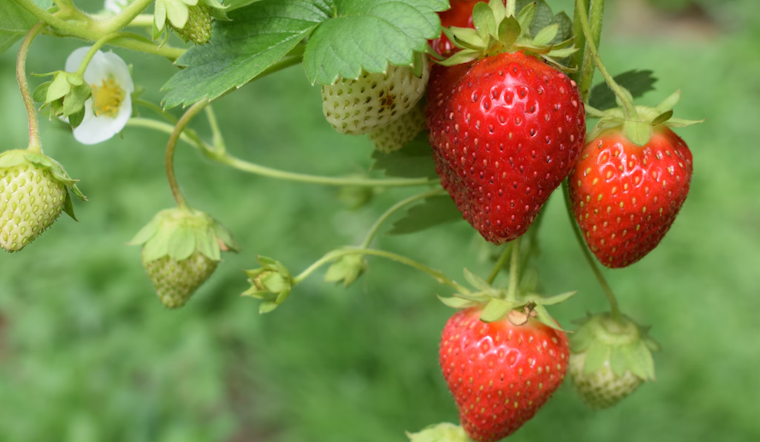
Ohio strawberry lovers may notice a shortage of locally grown berries this season as growers across the state battle a destructive fungal disease that's threatening crops and driving up prices. The College of Food, Agricultural, and Environmental Sciences (CFAES) at Ohio State University has launched a multi-faceted initiative to support farmers facing this unprecedented challenge.
The culprit behind the strawberry crisis is Neopestalotiopsis, commonly called "Neo-P," an aggressive fungal pathogen that can spread rapidly through strawberry fields and growing facilities. "Consumers can expect that there will be a limited supply of Ohio-grown strawberries this year," said Melanie L. Lewis Ivey, associate professor of fruit pathology in the Department of Plant Pathology at Ohio State University. "Based on reduced supply, the price of strawberries may be higher than in previous years," according to Ohio State News.
First identified in Ohio in 2021, Neo-P has made it increasingly difficult for growers to obtain healthy transplants, creating significant challenges for the state's strawberry industry. The fungus was originally detected in a single commercial field in Florida in 2017, but has since spread to multiple states across the country, as reported by Wisconsin Farmer.
Impact on Ohio Growers
The impact has been particularly severe for Ohio's strawberry producers. "The primary challenge growers have faced is purchasing disease-free transplants," explained Lewis Ivey, who also serves as a fresh produce safety specialist with Ohio State University Extension. "Most Ohio producers now plant in the fall for a spring/summer harvest, but last fall, nurseries were unable to supply transplants due to Neo-P," according to Farm and Dairy.
The disease is especially problematic for greenhouse and high tunnel growers, as there are even fewer fungicide options available for controlled environment agriculture than for field production. With no resistant strawberry varieties currently available and limited fungicide options, many farmers have been forced to reduce their plantings or abandon their strawberry crops altogether this season.
The situation has become so dire that some Ohio farms have had to cancel their strawberry events entirely. Welch Farms in Chillicothe, which has been growing strawberries since 2005, informed customers on Facebook that they couldn't obtain disease-free plants this year. Similarly, Blooms and Berries Farm Market of Loveland canceled their strawberry event after being informed that healthy plants were not available, as noted by Wisconsin Farmer.
Ohio State's Research and Support Efforts
In response to this crisis, Ohio State University has mobilized significant resources to help farmers navigate these challenges. Lewis Ivey has received funding through the CFAES Internal Grants Program and the Ohio Produce Growers and Marketers Association (OPGMA) to study the disease's impact and potential control strategies.
"This year, we're assessing the ability of the pathogen to overwinter in Ohio soils," said Lewis Ivey. "We're also working to identify the disease early to prevent the introduction of the fungus into new plantings," as stated in Ohio State News.
The Ohio State University Extension is providing essential education, research, and disease management recommendations to growers. Extension specialists are keeping farmers informed through Ohio Fruit News, presentations at grower meetings, and digital resources. Lewis Ivey also provides disease reference sheets and management recommendations to help growers develop effective spray programs for the season.
Additionally, Ohio State's C. Wayne Ellett Plant and Pest Diagnostic Clinic offers free disease diagnosis for commercial fruit and vegetable crops. Funded by OPGMA, this service helps growers identify infections early, allowing them to take timely action to protect their crops.
A Unique Research Opportunity
The disease has also affected research efforts at CFAES' Controlled Environment Agriculture Research Complex (CEARC) and the CFAES Wooster campus, located at 1680 Madison Avenue in Wooster, Ohio. "This disease has negatively impacted research because we obtain transplants from the same nurseries as field growers," Lewis Ivey explained. "If we receive diseased transplants, then we cannot conduct our research," according to Morning Ag Clips.
In some cases, infected plants have had to be destroyed, and entire greenhouse cleanouts have been required—expensive, labor-intensive processes. However, the outbreak has provided a unique research opportunity, allowing university scientists to study the disease in controlled environment agriculture systems.
Despite these challenges, ongoing research aims to mitigate the disease's long-term impact. "With all plant diseases, host resistance is the first line of defense," Lewis Ivey noted. She and Jonathan Fresnedo Ramirez, an associate professor in the CFAES Department of Horticulture and Crop Science, have submitted a Specialty Crop Block Grant proposal to the Ohio Department of Agriculture to identify commercial cultivars and accession lines that show tolerance to Neo-P infections.
Regional Impact and Future Outlook
The Neo-P fungal disease is not limited to Ohio. It has been reported in several states across the U.S. and Canada, with particularly severe impacts in warmer, more humid regions. Recently, the UW Plant Disease Diagnostic Clinic and the UW Fruit Crops Pathology lab confirmed the first cases of Neo-P in Wisconsin strawberries, raising concerns about the pathogen's northward spread.
However, there is some hope on the horizon. Researchers and growers are excited about a new variety of strawberry plant called "Number 025" that shows some resistance to Neo-P. Trials in Florida using fungicides Switch and Thiram have also shown promise in reducing disease incidence.
While Ohio State University continues its efforts to combat Neo-P, the institution is reinforcing its commitment to supporting Ohio's produce-growing community. By providing research-based guidance, diagnostic services, and ongoing education, CFAES is working to ensure the future success of Ohio's strawberry industry despite the current challenges.





