

























































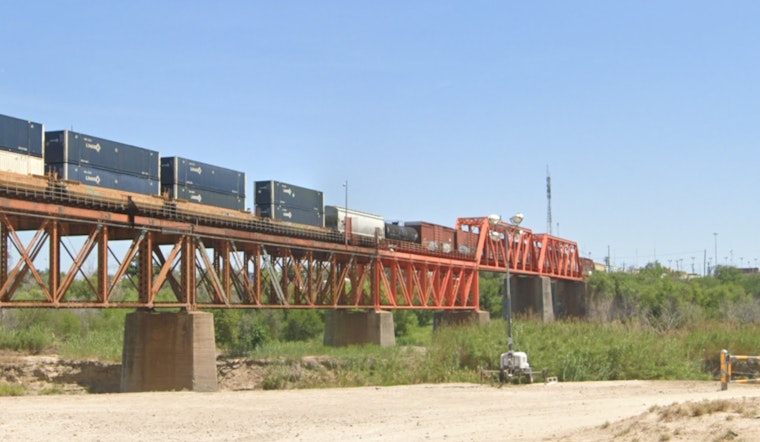
In a move to bolster the security of cross-border rail trade, U.S. Customs and Border Protection (CBP) has entered into a partnership with Canadian Pacific Kansas City Railway Company (CPKC) at the Laredo Rail Port of Entry. This collaboration is set to improve the efficiency and safety of the sizable trading operation between the United States and Mexico. Diane J. Sabatino, Acting Executive Assistant Commissioner, Office of Field Operations, told CBP newsroom that this partnership is aimed at increasing "lawful trade and travel by rail" between the neighboring countries.
The keystone of this partnership is CPKC's donation of a Vehicle and Cargo Inspection System Integrated Rail 6500 system, which is equipped with the Exploranium SRPM-210 radiation portal monitor. It's designed to scan, pinpoint, and classify radiation threats, ensuring that all cargo passing through the port is subjected to thorough inspections. James Clements, CPKC's executive vice president of Strategic Planning and Corporate Services, emphasized the company's dedication to the security of goods transported across the border. “This equipment, funded by CPKC and donated to CBP, is a key component in our industry-best secure international trade rail corridor between the United States and its largest trading partner, Mexico,” said Clements, as reported by the CBP.
CPKC's initiative to donate this state-of-the-art technology was proposed in November 2024, and an agreement was swiftly put into place the following month. The new system is currently active on the Patrick J. Ottensmeyer International Railway Bridge, which has recently added a second span to accommodate increased trade traffic between Laredo and Nuevo Laredo, Tamaulipas, Mexico. This execution adds to the efficiency and security of rail cargo inspected at one of the most active ports of entry along the U.S.-Mexico border.
The Donation Acceptance Program under which CPKC's contribution falls allows private and government entities to provide various donations, under legal authorization from 6 U.S.C. § 301a and the broader Homeland Security Act of 2002, for port-of-entry enhancements. These public-private collaborations are essential to CBP's strategy for optimizing resources, as they allow for the expansion of services and infrastructure at domestic ports of entry.





