

























































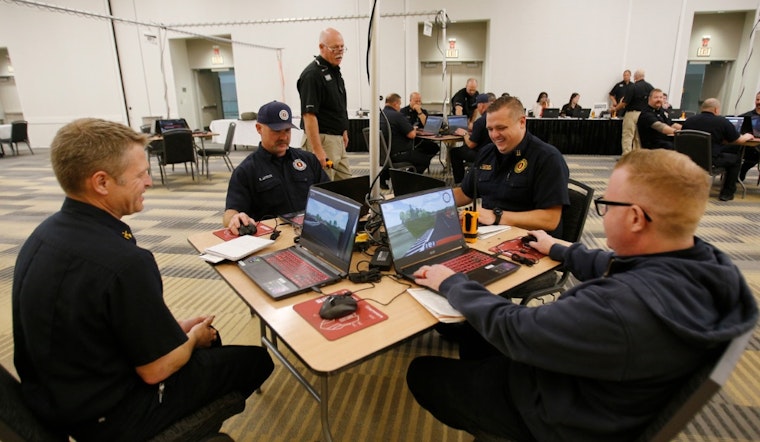
First responders in Columbus are stepping up their preparedness for situations that we all hope never to find ourselves in. Recently, the Columbus Division of Fire took part in an Active Shooter Incident Management (ASIM) Advanced class, designed to sharpen their skills for the worst-case scenarios. The training took place at the Greater Columbus Convention Center, spanning from June 3 to June 5, as described in a social media post by the Columbus Division of Fire.
Now, getting into the nitty-gritty, these aren't your standard drills. The first responders engaged in a 3-D simulation program, NIMSPro, to say, that had them running through 11 realistic scenarios meant to emulate an actual active shooter incident. They underwent the rigors of rotating through several pivotal roles, parts that included everything from managing a command post, dispatching, and running triage, to coordinating the transport of victims, and putting into action reunification efforts.
It's clear the aim was not just to run drills but to create a well-oiled machine out of different factions of first responders. Participants gained hands-on experience, all under the guidance of experts from the Texas A&M Engineering Extension Service (TEEX) and C3 Pathways. The idea? To foster confidence and competence in handling such grave situations. Case in point, the program put a spotlight on the necessity of integrating fire, EMS, and law enforcement responses to efficiently manage active shooter events, drawing on the urgency to improve coordination and communication across different services.
There's a real push to ensure that in the event these skills are called upon, the response is not just timely, but also cohesive. As per their social media brief, considerable emphasis was laid on "minimizing the time required to neutralize the threat and provide transport of victims to medical facilities." This level of training is indicative of not just the sad reality of these events in our times, but also of the commitment our responders have to keeping people safe in the midst of darkness.





