

























































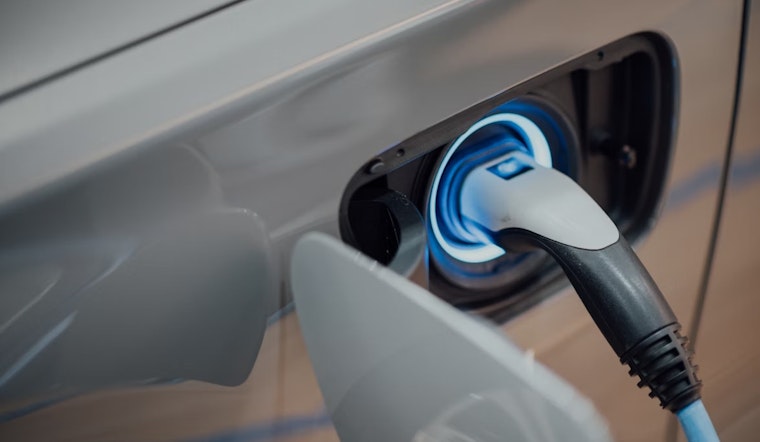
A federal judge in Seattle has delivered a significant victory for Washington Attorney General Nick Brown and 13 other states, ordering the Trump administration to restore approximately $1 billion in blocked funding for electric vehicle charging infrastructure. The preliminary injunction represents a major win in an ongoing constitutional battle over congressional spending authority and clean energy investments.
U.S. District Court Judge Tana Lin ruled Tuesday that the Trump administration must restore the states' Electric Vehicle Infrastructure Deployment Plans to their previous legal status and stop withholding previously authorized National Electric Vehicle Infrastructure (NEVI) funds. The order includes a seven-day stay, taking effect July 2 if the defendants do not file an appeal, according to the Washington State Attorney General's office.
Constitutional Authority at the Center of Legal Battle
"When the Executive Branch treads upon the will of the Legislative Branch, and when an administrative agency acts contrary to law, it is the Court's responsibility to remediate the situation and restore the balance of power," Judge Lin wrote in her decision, as reported by Washington State Standard. The ruling addresses what the states argued were constitutional violations related to the separation of powers doctrine.
Washington was positioned to lose over $71 million in electric vehicle infrastructure funding under the Trump administration's freeze. "Congress invested in forward-looking, clean electric vehicle infrastructure – exactly the future that Washington wants," Brown said, according to the Associated Press. "The court has now confirmed that Donald Trump can't just wish that future away because he likes fossil fuels."
Historic Judge Issues Groundbreaking Ruling
Judge Tana Lin, who delivered the decision from her chambers at the United States Courthouse, brings significant civil rights experience to this constitutional challenge. According to the Leadership Conference on Civil and Human Rights, Lin is the first Asian American federal judge in Washington state and has extensive background as a civil rights attorney and former public defender.
Lin previously served on the board of directors for the American Civil Liberties Union of Washington from 2016 to 2021, including as president from 2019 to 2021, according to Wikipedia. Her professional experience includes fighting for the rights of Washington farmworkers facing wage theft and challenging discriminatory hiring practices.
AG Brown's Rising Legal Profile
This victory adds to Attorney General Nick Brown's growing reputation as a formidable legal challenge to federal overreach. Brown, who according to the National Association of Attorneys General is Washington State's 19th Attorney General and the first African American to hold the office, has been aggressively challenging Trump administration policies since taking office in January 2025.
Brown's background includes service as a JAG Officer in the U.S. Army where he earned a Bronze Star Medal, experience as general counsel to Governor Jay Inslee, and tenure as U.S. Attorney for the Western District of Washington under President Biden, according to the state Attorney General's website. During his time with Governor Inslee, he helped lead opposition to Trump's travel ban targeting predominantly Muslim countries.
Legal Implications and Precedent
The case centers on fundamental questions of federal spending authority and congressional appropriations. According to NPR, the dispute highlights the separation of powers between the three branches of government, with Congress holding the constitutional power of the purse while the executive branch administers that spending.
The lawsuit challenged the Federal Highway Administration's February decision to rescind approval of state plans and withhold or withdraw NEVI program funds, despite Congressional mandate to fund the program, according to Brown's office. The states argued this constituted executive overreach that violated constitutional spending authority.
Regional EV Infrastructure Trends and Impact
Washington state has emerged as a national leader in electric vehicle adoption, remaining in the top five states for EV adoption for more than a decade, according to the Washington State Department of Ecology. The state's 2023 electric and plug-in hybrid vehicle sales were more than double the national average.
The funding freeze threatened to undermine Washington's statutory requirements for zero-emission vehicles, as the state has vehicle emissions standards requiring all new passenger cars, light-duty trucks, and medium-duty vehicles sold in Washington be zero emission by 2035, according to the Department of Ecology. Transportation represents the largest source of carbon pollution in Washington state.
Broader Legal Challenge Pattern
This EV infrastructure lawsuit represents part of a broader pattern of state legal challenges to Trump administration funding freezes. According to Earthjustice, environmental and community organizations have also joined legal challenges, with the Government Accountability Office finding that the Trump administration violated the law when it froze NEVI funding.
Brown is simultaneously leading another multistate lawsuit challenging the Trump administration's disruption of National Institutes of Health grant funding, demonstrating a coordinated legal strategy across multiple policy areas, according to his office.
National Program Impact
The National Electric Vehicle Infrastructure Formula Program was established through the 2021 Bipartisan Infrastructure Law to distribute $5 billion over five years to states for EV charging infrastructure. According to the Natural Resources Defense Council, all 50 states, the District of Columbia, and Puerto Rico have submitted approved deployment plans.
By late 2024, $2.4 billion had been allocated to states under NEVI, with funding tied to approved state plans and contracts, according to FleetOwner. The program has supported the construction of 56 operational charging stations with more than 900 sites awarded funding nationwide.
Timeline and Next Steps
Judge Lin's preliminary injunction provides temporary relief while the underlying constitutional case proceeds. The Trump administration has seven days to file an appeal, otherwise the Department of Transportation must resume distributing NEVI funds to the 14 states covered by the ruling, according to The Washington Post.
The ruling comes approximately seven weeks after Brown and 16 other attorneys general filed the initial lawsuit on May 7, challenging what they characterized as illegal termination of congressionally approved funding. Hoodline previously reported on the initial lawsuit filing.




