

























































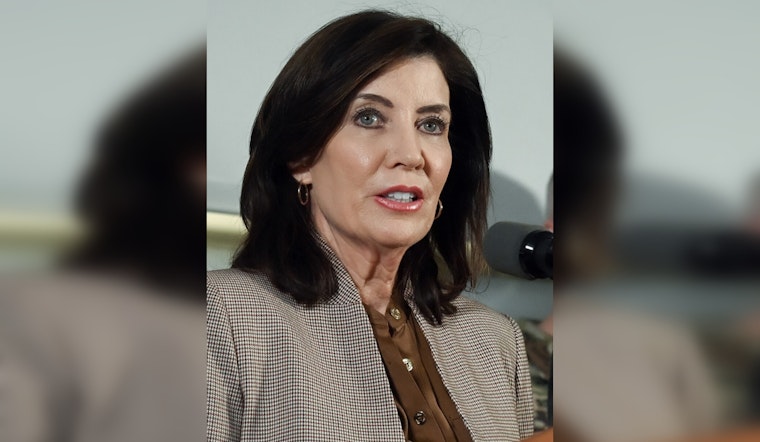
Gov. Kathy Hochul of New York is set to testify before Congress today, joining Democratic colleagues Gov. JB Pritzker of Illinois and Gov. Tim Walz of Minnesota, in a hearing on state immigration enforcement organized by the U.S. House Oversight Committee. The Republican-led committee has criticized these leaders for their immigration policies, framing them as protective of undocumented immigrants convicted of crimes. Gothamist reported that Committee chair Rep. James Comer condemned sanctuary policies, saying "These policies only create sanctuary for criminals at the expense of the American people."
Gov. Hochul maintains that New York’s policies strike a balance between enforcing the law and honoring the state’s tradition of diversity. Her office's statement stresses, "We are a nation of laws and a nation of immigrants," a sentiment reflected in her executive order limiting most state employees from inquiring about immigration status unless strictly necessary. However, her administration has maintained that New York will cooperate with federal governments under specific circumstances, such as when individuals are convicted of state crimes or suspected of crimes with "potential multinational dimensions." These nuances are part of an asserted effort to keep New Yorkers safe while allowing the state to be a place where immigrants can prosper, according to a memo detailed by Gothamist.
In the broader context, the Trump administration's attempts to enforce more stringent immigration law against so-called sanctuary jurisdictions has led to increased resistance from Democrat-led states, with New York, Illinois, and Minnesota intensifying their defense by strengthening laws that limit cooperation with immigration authorities. This conflict has sparked criticism from Republican lawmakers and led to legal challenges claiming that these state policies violate the U.S. Constitution or federal law.
Amid the contentious debate on relation between federal authority and state sovereignty in enforcing immigration rules, Gov. Pritzker of Illinois is expected to emphasize his state's stance, having previously stated that violent criminals, if undocumented, should be removed from Illinois and the country, but that state resources will not be reallocated to "do the job of the federal government." Minnesota, without a statewide sanctuary law, finds itself in a similar position, with Governor Walz having signed laws securing benefits for immigrants regardless of status, though a recent rollback on healthcare benefits coverage for undocumented adults was implemented—a move described by NBC New York.
The hearings come at a time when sanctuary jurisdiction policies are receiving increased attention at the national level. Republican U.S. Rep. Nick Langworthy has introduced legislation aimed at reducing federal funding to sanctuary jurisdictions, reflecting differing approaches to immigration enforcement. Across New York, local policies vary—from Rochester's restrictions on cooperation with federal immigration authorities to Nassau County on Long Island, where local agencies coordinate with ICE. These differences, along with state proposals such as the New York For All Act and Laken’s Law, illustrate the ongoing efforts to navigate the relationship between local governance and federal immigration mandates.





