

























































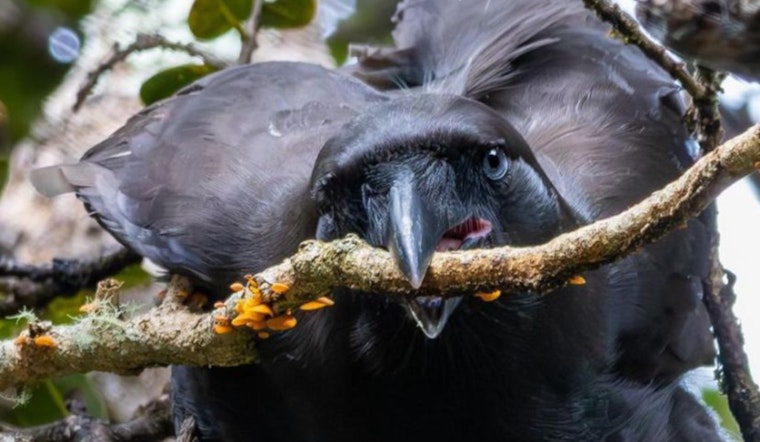
The future of the `alalā, or Hawaiian crow, just got a little brighter. After over two decades of absence in the wild, the recent release and observed behaviors of these birds present a glimmer of hope for the species and for conservationists alike. According to the Department of Land and Natural Resources, five captive-reared `alalā were released last November and have since been adapting to their natural habitat on the slopes of Haleakalā.
These birds aren't just surviving, they're showing signs of thriving, demonstrating an increasing array of natural behaviors, like foraging and territorial vocalizations. Nesting behaviors are particularly significant as they are a critical bellwether for the species' ability to sustain itself long-term. In a welcomed development, the monitoring team has recently seen nest building activities and even a constructed nest with a female `alalā perching on it regularly. Despite the progress, the team remains cautiously optimistic, understanding that successful breeding goes beyond nest construction.
Dr. Hanna Mounce, the Maui Forest Bird Recovery Project (MFBRP) program manager, conveyed excitement over these developments. "Seeing these birds forage on their own, interact naturally with one another and begin to exhibit courtship behaviors tells us that they’re adjusting to life in the wild,” Mounce stated in an interview with the DLNR. The concerted effort by the `Alalā Working Group, which includes the U.S. Fish and Wildlife Service, the DLNR Division of Forestry and Wildlife, San Diego Zoo Wildlife Alliance, the MFBRP, the National Park Service, and The Nature Conservancy, underscores the massive collaborative effort that's been ongoing to bring `alalā back to their native forests.
The `alalā were declared extinct in the wild since 2002, making this attempt at reintroduction not just a conservation milestone but also a significant cultural triumph for Hawaii. Each step taken by these birds in the wild is a testament to the decades of persistence and cooperation invested by numerous individuals and organizations. "This moment represents the culmination of decades of planning, perseverance, and collaboration," Mounce added, noting how the birds are reconnecting with their forest home, giving everyone involved real hope for what’s to come, as per the DLNR's release.




