

























































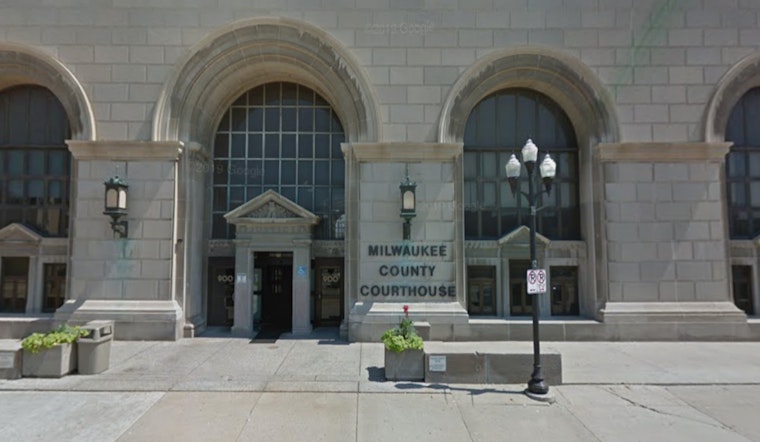
Day six of the Maxwell Anderson murder trial brought forth a slew of evidentiary details as both the prosecution and defense continued to build their narratives around the last days of Sade Robinson's life. In the morning's proceedings, the Milwaukee County Sheriff's Office's Det. Hobe Love gave testimony regarding a pair of bloody latex gloves found near the site where parts of Robinson's body had been discovered, WISN reported. Love believed the gloves had been intentionally placed there, dismissing the possibility of their having been blown by the wind.
Detective Vincent Lopez later testified about a gray hooded sweatshirt discovered in the proximity of Anderson's residence, which contained a small knife among other items, according to TMJ4. The day's testimonies also highlighted the conspicuous absence of the outfit Anderson was seen in on surveillance footage the morning after Robinson's last sighting. An unsettling collection of 51 knives and an axe were presented to the court as part of the items found in Anderson's home, yet none bore traces of blood, noted CBS 58.
Forensic evidence played a dominant role, with the prosecution showing jurors multiple surveillance videos, including one from Robinson and Anderson's initial meeting at Duke's on Water—the last place Robinson was reportedly seen alive. In stark contrast, the defense honed in on the approachability of the pair's body language exemplified by a friendly hug captured on camera, thereby challenging the implication of premeditated malice.
Complicating the narrative were the statements about the surveillance video from a neighbor's home that, WISN reported, showed movement in Anderson's side yard and a vehicle's departure from the property around the time of Robinson's disappearance. However, the obscure quality of the footage provided fertile ground for the defense to question the credibility of the evidence presented. The testimony on an odorless and seemingly untouched red couch in Anderson's house suggested a lack of corroborative physical evidence in the space that might typically indicate a violent altercation.





