

























































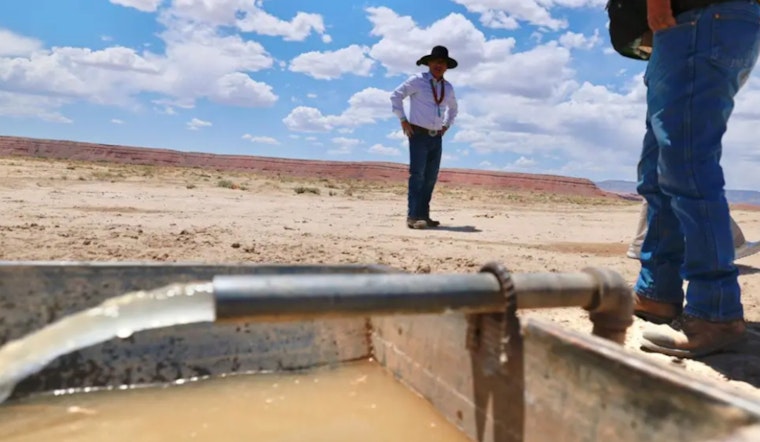
The Navajo Nation is grappling with a severe drought, leading to President Buu Nygren and the Navajo Commission of Emergency Management to declare a drought emergency, as reported on the official Navajo Nation Office of the President's website. This declaration was made on May 30 in response to the oppressive drought conditions that continue to affect large parts of the Navajo Nation. The emergency status has spurred urgent calls for coordinated resources from the government, reduction of livestock by owners, and a significant $6.5 million financial commitment from the tribe's Agriculture Infrastructure Fund to assist farmers and ranchers.
According to the resolution, signed by both President Nygren and Marcarlo Roanhorse, chairman of the NCEM, counties within the Navajo Nation have been designated disaster areas by the U.S. Department of Agriculture due to the dire drought conditions. This includes areas in Arizona, New Mexico, and Utah. The National Oceanic and Atmospheric Administration provided data indicating that precipitation levels from May through August fell short of the seasonal averages. "This has resulted in depleting water sources, degraded rangeland, and increased risk of wildfires," Roanhorse said in a statement obtained by the Navajo Nation Office of the President's website.
Compounding the issue within New Mexico, Governor Michelle Lujan Grisham issued an executive order in May, establishing a statewide emergency due to drought and activated the state's Drought Task Force to address the problem. The Navajo Nation is now experiencing reduced capacities in over 7,500 stock ponds and 900 windmills, vital for water storage and distribution in the region.
President Nygren has directed all Navajo government agencies to join forces in mitigation efforts with federal, state, and tribal partners. "Drought is a major concern for many people who live in the Southwest," President Nygren told the Navajo Nation Office of the President's website, "But, for the Navajo people, this our life. We are doing everything we can from the executive level to help our families, elders, and children with relief from our AIF fund which depends on our drought insurance for emergencies like this." The NCEM resolution outlines that $6,553,730 will be allocated from the Agricultural Infrastructure Fund to urgently address infrastructure needs.
Moreover, Navajo Nation chapters have been authorized to employ emergency funds for water hauling, storage, and local mitigation activities following Navajo Nation's established emergency protocols. A call for emergency response coordination and the allocation of resources has been initiated by all Navajo Nation divisions, departments, programs, and chapters, in collaboration with federal, state, and tribal partners. The emergency declaration will remain in place until it is either rescinded or replaced by subsequent actions.





