

























































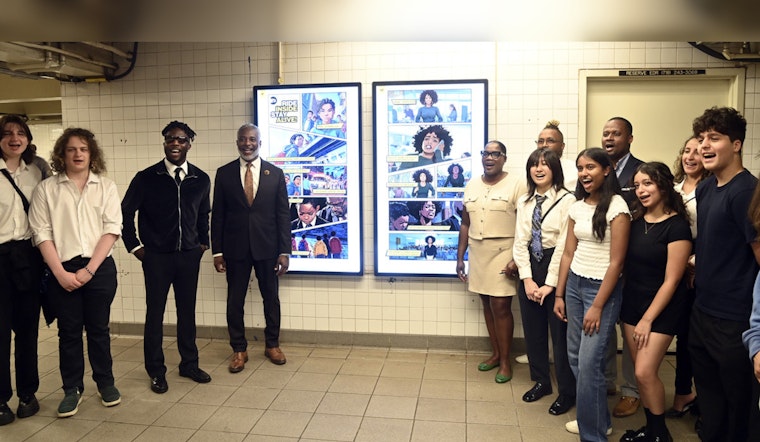
In response to the ongoing and dangerous trend of subway surfing, New York officials have intensified their efforts through a combination of awareness initiatives and possible physical measures. A new campaign, "Ride Inside Stay Alive," has been introduced through a partnership involving the MTA, Governor Kathy Hochul, city schools, the Department of Youth and Community Development, and BMX athlete Nigel Sylvester. Digital comics detailing the consequences of subway surfing are being featured throughout the subway system, targeting outreach to at-risk youth, according to Gothamist.
The comics illustrate narratives of individuals affected by subway surfing, emphasizing the profound loss experienced by their families and communities. Gothamist reports the aim is to show the reality of what might seem like a thrill-seeking act. Despite previous initiatives to decrease the activity, six people lost their lives in 2024, marking an increase from the previous year's statistic. Utilizing the voice of Sylvester, who speaks directly to the youth in English and Spanish announcements, brings a sense of relatability and authority to the campaign.
In a recent development, students have actively joined the initiative to counteract the subway surfing trend. Ahana Chandra, a Stuyvesant High School student, was moved to action after a classmate relayed the death of a friend due to subway surfing. "Obviously, the whole class went silent. And I just couldn’t fathom that there were people who maybe going to the same school as me in the same lunch line as me, who were also subway surfing, riding on top of train cars," Chandra told NY1. Her participation contributed to the development of a student-centered PSA, featuring targeted statistics to reinforce the message’s impact.
On the operational side, the MTA is not only relying on emotional appeals but is also experimenting with physical deterrents to prevent this reckless behavior on top of the train. "We’re trying a number of different things to try to stop this from happening. That’s one of the pilots that we’re running. It is a circular rubber tubing that essentially would, in theory, prevent the person from being able to climb to the top of the train," said Demetrius Crichlow, New York City Transit President, in a statement to NY1. These efforts are coupled with police use of drones and stationing officers at high-risk locations.
These renewed strategies—particularly involving students in developing anti-surfing messages—appear to have the potential to connect more effectively with their peers and discourage the dangerous behavior. Students have expressed optimism, noting that peer-to-peer communication may be a more impactful approach. "Since it’s like a comic book and not just like, I guess like the MTA, and the authorities telling you simply not to do a trend. I feel like, you know, it mostly speaks to them," remarked student Camilla Perez to NY1. The NYPD has not yet released the latest injury and arrest figures. Meanwhile, community engagement and protective measures are being implemented to address transit safety for New York’s youth.



