

























































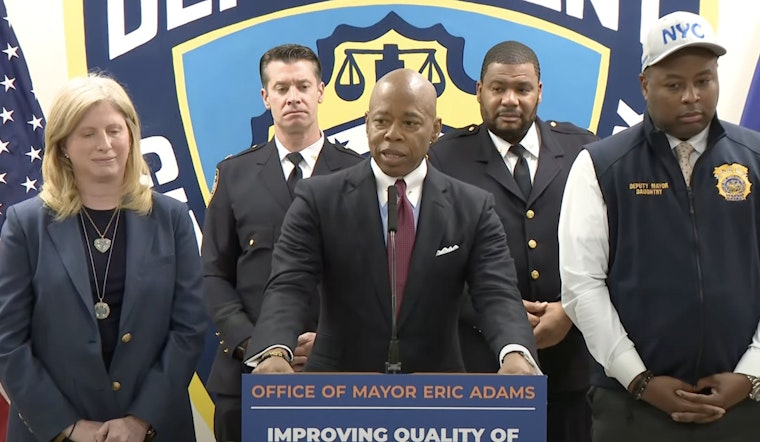
New York City is taking a targeted approach to public safety, with Mayor Eric Adams and NYPD Commissioner Jessica S. Tisch announcing the expansion of the NYPD's Quality of Life Division. Initially launched in April, the division's pilot program centered on addressing common grievances that affect New Yorkers' sense of security and overall comfort in their communities. Following its perceived effectiveness in the pilot areas, the program is now set to widen its net across all five boroughs of the city.
During its first 60 days, the pilot program—covering the 13th, 40th, 60th, 75th, and 101st precincts along with Police Service Area 1—responded to over 7,500 emergency 911 and 311 calls related to quality-of-life issues. According to a city release, officers issued more than 6,100 summonses and made 357 arrests. The program also achieved a notable reduction in average 311 response times by over 16 minutes. These results have led the city to move forward with phase one next month, followed by a second phase in August.
Mayor Adams expressed his commitment to the issue, arguing that "every New Yorker deserves to live in a neighborhood that is safe from gun violence, that has clean streets, and that is free from illegal activities." This was paralleled by Commissioner Tisch's affirmation that the sooner-than-expected impacts of the division warrant this expansion. "From illegal smoke shops to abandoned vehicles to reckless mopeds, these are the problems people see every day and expect action on," Tisch told the Mayor's office.
The Q-Teams will be trained to address a range of non-emergency issues, including excessive noise, abandoned vehicles, and illegal vending. The program’s expanded scope emphasizes both firm enforcement and recognition that some situations require a more nuanced response. Modeled after the CompStat system, Q-Stat meetings will continue to hold precincts accountable by reviewing results and identifying problem areas. Collaboration is also key, with the NYPD’s Community Affairs Bureau working to strengthen engagement with residents and local businesses.
Unanimous support also came from local government representatives. New York City Councilmember Mercedes Narcisse noted, "These are the things that directly affect how safe and comfortable people feel in their neighborhoods." New York State Senator Roxanne J. Persaud also lauded the expansion, suggesting it recognized the significance of quality of life issues to every New Yorker, with her remarks included in the press release.




