

























































Published June 29, 2025
San Francisco is officially 249 years old today, and the timing couldn't be more perfect—the city's birthday coincides with what's shaping up to be one of its biggest Pride celebrations yet. Founded on June 29, 1776, coincidentally just five days before America declared independence, the city has spent nearly two and a half centuries mastering the art of reinvention.
The transformation from Spanish colonial outpost to global LGBTQ+ center and tech powerhouse reads like the ultimate origin story. For over 10,000 years, the Ohlone and Coast Miwok peoples stewarded these lands with controlled burns and sustainable practices that modern environmentalists are still trying to replicate. Then Spanish colonists arrived in 1769—Captain Gaspar de Portolá was actually looking for Monterey but stumbled onto San Francisco Bay instead. By June 29, 1776, they'd established the Presidio and Mission San Francisco de Asís, according to National Today, setting off a chain reaction that would reshape everything. This date is considered to be the founding of San Francisco
The next century was basically a game of historical musical chairs. Spanish rule gave way to Mexican control in 1821, then American flags flew over Yerba Buena after US Navy Captain John Berrien Montgomery claimed it in 1846. But the real plot twist came in 1848 when James W. Marshall found gold at Sutter's Mill, turning a sleepy settlement of 200 people into a 150,000-person boomtown faster than you could say "Gold Rush."
Among those riding the wave were two scrappy teenagers who'd borrow $20 and accidentally create a media empire. Charles and Michael de Young launched what would become the San Francisco Chronicle in 1865 from "a dingy room at 417 Clay Street," as the California State Library documents. Their 'Daily Dramatic Chronicle' started as basically a theater program, but within a decade they were running the largest newspaper west of the Mississippi, though the journey was not without its own drama and intrigue, according to Wikipedia.
Michael de Young later founded the de Young Museum with a radical concept for the time: free admission for everyone. He believed cultural treasures should be accessible to all, as Wikipedia notes—a surprisingly progressive stance that foreshadowed the city's future values. Though their success story included the kind of frontier violence that defined the era: Charles was gunned down in 1880 by the mayor's son following a largely armed political feud, as the San Francisco Chronicle would later report.
If San Francisco has a superpower, it's bouncing back from disasters stronger than before. The 1906 earthquake and fire wiped out 80% of the city, but instead of throwing in the towel, residents rolled up their sleeves and rebuilt with better infrastructure and more innovative architecture. World War II brought another massive transformation, turning the city into the Pacific theater's main supply hub and attracting workers from across the country.
Those demographic shifts set the stage for San Francisco's emergence as America's unofficial capital of counterculture. The Beat Generation gathered at City Lights Bookstore in the '50s, then the Summer of Love exploded through Haight-Ashbury in 1967, drawing tens of thousands who wanted to experiment with everything from music to alternative lifestyles. These weren't just cultural moments—they were building blocks for something bigger.
The city's tradition of embracing nonconformity created the perfect conditions for what would become its most defining modern characteristic: serving as a sanctuary for LGBTQ+ individuals seeking acceptance and community. Those informal networks evolved into organized activism, transforming San Francisco into the epicenter of modern LGBTQ+ rights.
The tech boom brought yet another plot twist. Silicon Valley's evolution from 1950s electronics to internet-age innovations created unprecedented wealth while simultaneously triggering housing costs that make Gold Rush speculation look quaint. The same entrepreneurial spirit that turned borrowed gold pieces into newspaper empires now drives global innovation, though it's also created displacement challenges that echo the city's earliest colonial patterns.
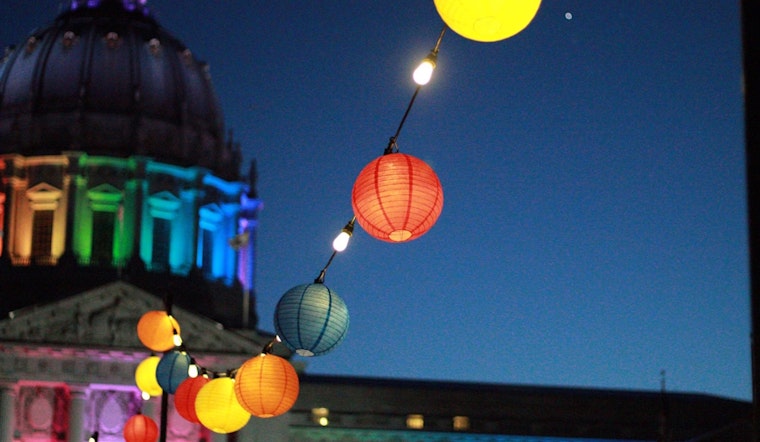
This weekend's celebration perfectly captures San Francisco's journey. Pride 2025, themed "Queer Joy is Resistance," runs June 28-29, with the parade starting at 10:30 a.m. on Market Street, according to SF Pride. The overlap between a 249-year-old colonial founding and one of the world's biggest LGBTQ+ celebrations tells the whole story of how dramatically this place has reinvented itself.
From Mission Bells to Pride Horns
The de Young brothers' legacy lives on—that newspaper that started in a Clay Street room now operates from 901 Mission Street, according to Company Headquarters, still documenting each new chapter in the city's endless reinvention story. The same place that once forced indigenous peoples into missions now hosts one of the world's largest celebrations of chosen family and radical inclusion.
What makes this anniversary particularly striking isn't just how much San Francisco has changed, but how its core DNA—that willingness to bet everything on transformation—has remained constant. From Spanish colonial outpost to Mexican pueblo to Gold Rush boomtown to tech hub to LGBTQ+ sanctuary, the city keeps writing and rewriting its own script.
As Pride flags fly alongside official city banners this weekend, San Francisco's 249th birthday becomes more than just a historical milestone. It's proof that places, like people, can fundamentally change who they are—and in a city that's never met a reinvention it didn't like, that might be the most San Francisco thing of all.




