

























































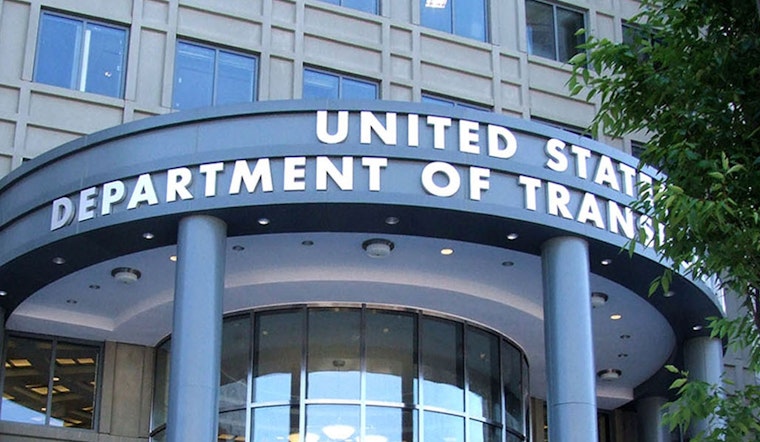
Transportation Secretary Sean P. Duffy just dropped a regulatory bombshell that's about to reshape America's trucking landscape, and some states are looking at a whole lot more scrutiny than others. The nationwide audit of non-domiciled commercial driver's licenses announced Friday isn't just another bureaucratic exercise—it's targeting specific states where foreign-born drivers have become essential to keeping freight moving, and the implications could ripple through entire regional economies.
Illinois sits squarely in the crosshairs, and frankly, it's not hard to see why. According to Overdrive, the Prairie State has gone from issuing a mere 80 non-domiciled CDLs in 2015 to making them 40% of all new commercial licenses in 2025. That's not gradual growth—that's a seismic shift that screams "unusual patterns" to federal auditors. With 13,668 non-domiciled CDLs issued since 2015, Illinois has essentially transformed its entire CDL program in less than a decade.
Texas takes the crown for sheer volume, and new data from Overdrive shows the Lone Star State has issued up to 51,993 non-domiciled CDLs since 2015. While Texas's percentage increases look modest compared to Illinois—growing from 1.64% in 2015 to 2.84% in 2024—those raw numbers represent the largest documented population of non-domiciled CDL holders in the country. When you're moving freight through major corridors serving Houston's energy sector and Dallas-Fort Worth's 23 Fortune 500 companies, those numbers matter.
West Coast States Show Explosive Growth Patterns
Washington State's trajectory reads like a case study in rapid expansion. Since implementing non-domiciled CDL programs in 2018, Overdrive reports the state has seen these licenses grow from 4% of first-time CDLs before 2020 to 16% in 2024. That's a four-fold increase in percentage terms, with 5,481 total non-domiciled CDLs issued—significant numbers for a state that serves as a critical link in Pacific Rim trade.
Oregon's numbers tell an even more dramatic story. Starting from just 11 non-domiciled CDLs in 2020, Overdrive found the state jumped to 445 in 2023—a 40-fold increase that would make any federal auditor take notice. These West Coast patterns become particularly significant when you consider their role in serving major port operations.
Metropolitan Areas Face Economic Vulnerability
The audit's impact won't be evenly distributed—it's going to hit major metropolitan areas where immigrant drivers have become integral to freight operations. Los Angeles-Long Beach-Anaheim leads the pack with 96,700 foreign-born truck drivers, representing 52% of the local truck driving population, according to 24 Hour Translation. That's the highest concentration nationally, and it anchors a logistics network that handles 40% of all U.S. containerized imports.
Chicago faces a double whammy—it's the second-largest metropolitan area for immigrant truck drivers with 49,000 (30% of the local population), and it sits in Illinois, the state with the most dramatic non-domiciled CDL growth. Blue Signal Search notes Chicago serves as a central logistics hub with $700 billion in gross regional product, making any driver shortage here potentially catastrophic for Midwest freight movement.
Houston shows 40% immigrant truck drivers despite immigrants comprising only 25% of the regional population, indicating heavy industry concentration in trucking, as reported by 24 Hour Translation. Given Texas's massive non-domiciled CDL numbers and Houston's role in energy logistics, this metropolitan area represents a critical chokepoint that could affect national commerce.
California's Port Complex Creates National Vulnerabilities
California presents a fascinating case because the state doesn't track non-domiciled CDL numbers, but the economic implications are staggering. The Port of Los Angeles/Long Beach complex handles 31% of U.S. containerized waterborne trade, according to Port of Los Angeles, with 14,000 drivers moving 11,000 cargo-filled containers daily. LAist reports that 80% of these drivers are classified as independent contractors or owner-operators—categories that commonly utilize non-domiciled licensing.
The economic math here is sobering. Foreign-born drivers comprise nearly 720,000 of the nation's truck drivers, as noted by Goldstein Immigration Lawyers, and they're heavily concentrated in regions that can least afford supply chain disruptions. Any significant restriction on non-domiciled CDL access could create cascading effects through supply chains serving the entire Western United States.
Fraud Patterns Point to Additional Scrutiny
The audit comes on the heels of major CDL fraud discoveries that suggest certain states will face particularly intense scrutiny. California has seen extensive enforcement actions, with Land Line Media reporting the Eastern District prosecuted 20 defendants in a major DMV corruption case involving "hundreds of fraudulent CDLs" issued across the state. Key schemes included DMV employees accepting $1,500-$9,000 per fraudulent CDL.
Texas shows similar vulnerabilities through documented state employee corruption cases. Land Line covered cases involving 215 fraudulent CDLs issued between January 2017 and June 2019, primarily to Cuban nationals, with a Texas Department of Public Safety employee receiving 24 months in prison for facilitating fraudulent test results.
The fraud isn't limited to these states—Florida recently made headlines when Bay County Sheriff Tommy Ford announced they seized over $120,000 in illicit proceeds tied to a CDL fraud operation. Evidence suggests hundreds, possibly over a thousand fraudulent driver's licenses were issued as part of this scheme, according to The Center Square.
Regional Economic Impact Could Be Severe
The numbers behind America's freight system make the potential impact crystal clear. The transportation sector contributes $1.7 trillion (6.7%) to U.S. GDP, with the freight system moving 55 million tons worth $49 billion daily, as detailed by the Federal Highway Administration. Major freight corridors dependent on non-domiciled drivers include the I-10 corridor from Los Angeles to Houston and the Interstate 95 Northeast Corridor connecting major port cities, according to Sharerig.
The timing couldn't be worse for an industry already struggling with capacity. The American Trucking Associations reports the industry faces an existing 80,000-driver shortage projected to reach 160,000+ by 2030, with turnover rates exceeding 90% in long-haul sectors. Restricting non-domiciled CDL access would exacerbate shortages in regions already struggling with capacity constraints.
Enforcement Mechanisms Create Additional Pressure
Secretary Duffy isn't just launching an audit—he's implementing new enforcement mechanisms that will make non-compliance costly. The U.S. Department of Transportation announced the Federal Motor Carrier Safety Administration will conduct compliance reviews of states issuing non-domiciled CDLs to identify patterns of abuse and ensure federal standards are being met.
Recent FMCSA audit data shows the agency means business. Foley Services reports that 94% of 2024 audits resulted in violations, with total fines exceeding $27 million. The most common violation involves "allowing driver to operate with suspended/revoked CDL," cited 1,366 times in 2024 with individual fines reaching $6,974.
Adding to the pressure, new Drug and Alcohol Clearinghouse requirements took effect in November 2024, requiring states to check the system before issuing or renewing CDLs. Currently, 91,523 drivers with violations haven't started return-to-duty processes, creating additional enforcement targets, as noted by the FMCSA Clearinghouse.
States that have built their freight operations around non-domiciled CDL holders now face a regulatory reckoning. Illinois's 40% dependency makes it the most vulnerable to immediate crisis, while Texas's massive absolute numbers could affect interstate commerce patterns nationwide. California's refusal to track these numbers may itself trigger scrutiny, particularly given the state's critical role in import logistics.
The audit represents unprecedented federal intervention in state CDL programs, with potential consequences ranging from enhanced oversight requirements to federal prohibition of non-compliant states from issuing CDLs. For states like Illinois and Texas, the economic implications extend far beyond transportation—they're looking at potential disruptions to entire regional supply chains that have become dependent on foreign-born drivers to keep America's freight moving.





