

























































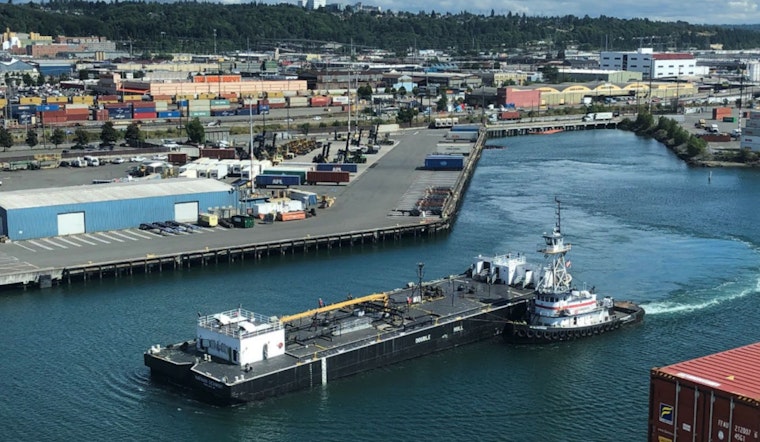
Washington State's maritime landscape is poised for heightened safeguards, as a newly proposed rule from the Washington State Board of Pilotage Commissioners, in collaboration with the Washington Department of Ecology, looks to augment tug escort mandates for an array of tank vessels traversing Puget Sound. This regulatory enhancement is designed with the clear intent to diminish the probability of oil spills, a persistent environmental threat to the area's aquatic vitality and economic health.
The latest proposition set forth by the Board, an entity tasked with the arduous responsibility of overseeing vessel safety in Puget Sound, aims to broaden the spectrum of vessels requiring tug escorts, specifically to include oil tankers with a deadweight tonnage ranging from 5,000 to 40,000 DWT, as well as articulated tug barges, and towed barges over 5,000 DWT. Notably, the existing escort requisites for oil tankers exceeding 40,000 DWT will remain unaffected by these changes.
In a bid to consolidate tug effectiveness during dire situations, the rule codifies novel requisites; among them are tugs meeting horsepower thresholds being compulsory, the imperative use of twin-screw propulsion systems and the mandate for a pre-escort conference to facilitate risk-aversive transit coordination. Moreover, the escort province is slated for expansion, encompassing an additional nearly 29 square miles – enveloping the Rosario Strait and contiguous waterways extending northwest in the direction of Patos Island, according to Jaimie Bever, executive director of the Board of Pilotage Commissioners.
"Tug escorts are an effective tool in preventing oil spills before they happen," Bever said, elucidating the rationale behind the rule, as reported by the Department of Ecology. The Board assiduously collaborated with Ecology to develop the rule and also established the Oil Transportation Safety Committee, which encapsulates a diverse cohort of representatives spanning tribal governments, the maritime sector, aligning with industry and environmental constituents. The involvement of the U.S. Coast Guard as an advisor, together with insights from an environmental impact assessment and ensuing regulatory analyses, were instrumental in sculpting the newly proposed protective measures.
Although Washington's waters have remained untarnished by a significant oil spill in the recent past, these pre-emptive measures align with the anticipatory ethos endorsed by the 2019 Engrossed Substitute House Bill 1578. The rule remains bound by the 'best achievable protection' criterion, signifying a judicious balance between the steadfast safeguarding of the environment, technical feasibility, and curbing the economic repercussions stemming from the amendments.
The public's perspective holds merit in finalizing the rule; hence, the Board of Pilotage Commissioners and Ecology are welcoming public remarks on the proposition, with a submission window stretching from June 11 to August 1, 2025. Comments can be entered online via the Department of Ecology's website, or by conventional mail. Additionally, several public hearings are scheduled to furnish a comprehensive overview of the forthcoming rule, to entertain inquiries, and subsequently, public discourse. The sessions are set for July 17 at 10 a.m., July 22 at 1 p.m., and July 23 at 6 p.m., with opportunities for both in-person and webinar participation.




