

























































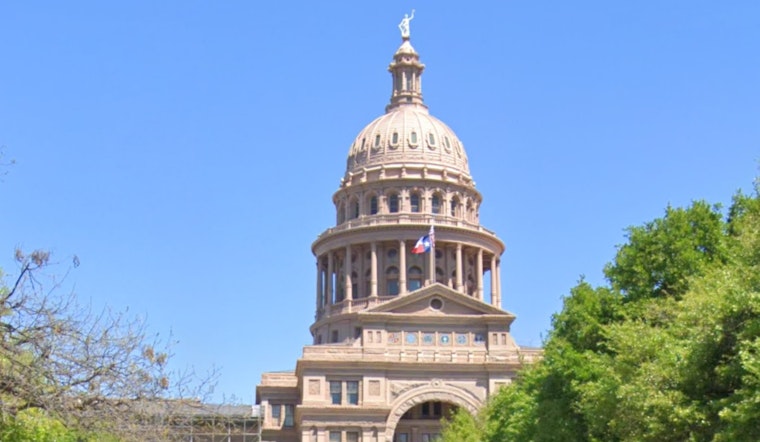
Houston finds itself at the epicenter of a contentious redistricting debate as Texas legislators convene for a special session. Governor Greg Abbott has expanded the session's agenda to include redistricting, following a U.S. Justice Department complaint suggesting current congressional districts in Houston and Dallas might be racially gerrymandered, described as 'race-blind' by detractors. As reported by CW39, critics are concerned that this redistricting push by the GOP could strategically shift power before the approaching 2026 elections.
According to CW39, Texas Democrats argue that this move is politically motivated, allegedly designed by President Trump to aid Republican seat gains in future elections. Trump appeared to validate these claims in a July 15 interview with Politico, remarking, "A simple redrawing, we pick up five seats." This statement has intensified the dialogue around the redistricting's underlying intentions. Meanwhile, behind the scenes, Governor Abbott and the state's GOP delegation were initially hesitant to redraw the maps, out of concern that it could jeopardize their positions by spreading Republican voters too thin in an attempt to capture Democratic seats. This is according to anonymous sources who spoke with ABC13.
Much of this redistricting reluctance dissipated following President Trump's direct involvement, specifically a call with Governor Abbott, after which redistricting surfaced on the special session's agenda. Trump's influence over Texas Republicans and his legislative priorities are clear, with redistricting perceived as a move to safeguard his policy successes. Abbott's office, however, remained tight-lipped about these discussions. His spokesperson, Andrew Mahaleris, chose not to comment on the private conversations but emphasized the Governor's anticipation for addressing a range of important issues during the special session.
With Governor Abbott's eventual support, the plan to redraw Texas' congressional districts has been met with mixed reactions within the GOP ranks. While some members openly embraced the proposition—such as Rep. Troy Nehls, who told colleagues, "If we can redraw Texas and it fits within all the confines of law and everything, well, then let's get 'er done"—others have remained quiet or opposed the idea, as noted by ABC13. The DOJ's concerns pertaining to four Democratic-controlled districts, cited by Abbott as a primary reason for the redistricting, have become a point of contention, with Democrats considering them a pretext for partisan gerrymandering.
The situation in Texas has sparked a chain reaction across the country, with Democratic leaders in other states considering their strategies in response. For example, California Gov. Gavin Newsom has voiced potential moves to counteract the GOP's redistricting efforts by possibly bypassing California's independent redistricting commission. This move could see blue states like California redrafting their maps to fortify Democratic representation, setting the stage for a national tug-of-war over congressional map-making.





