

























































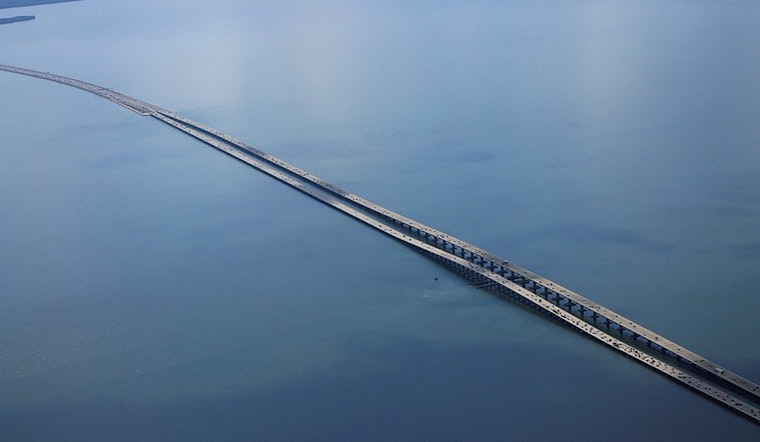
The process of dismantling the aging Howard Frankland Bridge, an iconic structure connecting Pinellas and Hillsborough counties since the 1960s, has started, with crews kicking off the deconstruction phase. As per WFLA, the Florida Department of Transportation's (FDOT) officials detailed that the operation will be unconventional as it begins at the center and moves outward. With an entire fleet of watercraft, barges, and cranes poised to methodically dismantle the three-mile structure, the procedure will avoid explosive demolition methods favoring a more environmentally conscious approach.
David Alonso, FDOT's Construction Project Manager, noted that this significant phase is part of a broader $865 million initiative aimed at improving connectivity in the region, as reported by FOX 13 News; the demolition is expected to last eight to nine months, setting the stage for subsequent infrastructure improvements such as the new Howard Frankland Bridge.
Alonso told ABC Action News, "Over the next seven to eight months, you'll start seeing it disappearing from the middle of Tampa Bay, and working that demo will progress in a sequential fashion out to both Hillsborough and Pinellas sides of the causeways," therefore demonstrating the strategic planning FDOT employs in this large-scale operation.
The deconstruction also matches the introduction of the new bridge which promises enhanced capacity, resilience, and safety measures, a latest expectation is that it would serve the public for at least a century, the transition signifies both an end and a beginning, with the past being carefully deconstructed while the future structure is prepped to take on the baton of connectivity. Commuters currently traversing the bridge can witness the changes firsthand, with visible signs of the bridge's slow reclamation by the land and sea piercing their daily commutes.
Alonso, who has a deep personal connection with the bridge, expressed nostalgia, stating, "I was born and raised in Tampa Bay, so this is a rich piece of my own history," an affinity that likely resonates with many locals who've known the structure as a fixture of their environment, Alonso also shared insights into the care taken to recycle the bridge's materials, discussing how concrete from the demolition will be repurposed for other uses—"Concrete will be broken up into various sizes, cleaned up, and resold for roadway applications and other construction needs," he explained in an interview with ABC Action News.





