

























































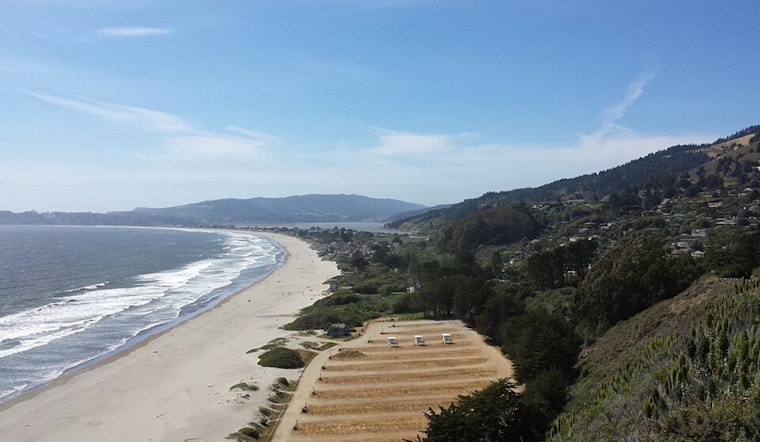
The future of the beloved Stinson Beach, a cherished Bay Area gem nestled in Marin County, hangs in the balance, with a recent report detailing the need for shockingly pricey fixes to stave off the impacts of sea level rise. Marin County officials have unveiled hard-hitting findings that show the coastal town could see up to 3.3 feet of sea level rise by 2085. The damages from storms clock in at $8 million, but with added sea level rise, tossing that number to an astronomical $1.3 billion is within the realm of possibility.
In the face of these daunting figures, Marin County has consulted with Environmental Science Associates to craft a multipronged adaptation strategy projected to cost around $1.2 billion. This hefty sum would fund critical projects, including road elevation, bridge improvements, and shoreline defenses, as stated by the SF Chronicle. Funding, however, poses a unique challenge due to the area's high volume of vacation properties, with only 15% of Stinson Beach's 759 parcels being primary residences.
The economic toll is not the sole concern, as Stinson Beach's character and utility hold significant recreational value for the whole Bay Area. Kathleen Kilgariff, a senior planner for the Marin County Community Development Agency, emphasized the beach's importance in a statement to the SF Chronicle, noting, "It really is a recreational resource for so many people, not only those who live there." Sea level rise is expected to elevate the ocean and its destructive waves, threatening to undo the beach’s natural protective role.
Measures such as community wastewater systems and home elevation guidelines are on the table as part of the proposed adaptation plan. Still, without dedicated county funds, the community faces an uphill battle securing the necessary financing. According to SFGATE, the National Park Service and other organizations could be roped into larger project involvement. Furthermore, there’s a discussion of creating local funding districts that could lead to more funds through special assessments.
The urgency of these measures is underscored by UC Berkeley's Kristina Hill, who raises questions about the viability of investing vast sums in an area that may eventually become unlivable. "Should we spend $1.3 billion to adapt an area that is walking the plank and won’t be viable after that 3 feet of sea level rise?" Hill told the SF Chronicle.



.jpg)