

























































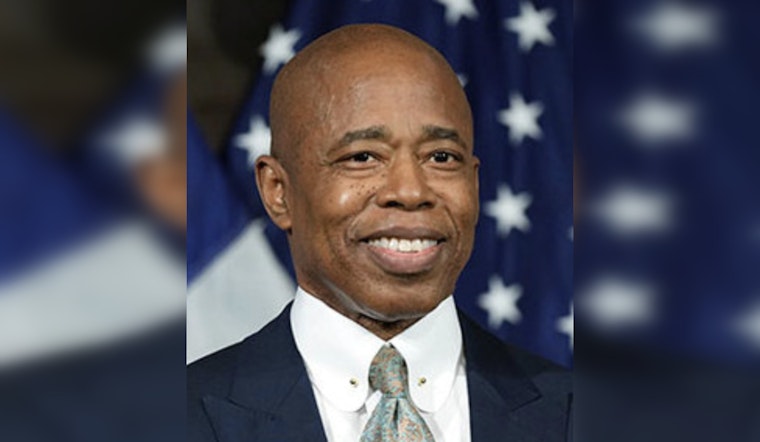
New York City Mayor Eric Adams broke ground on the "Innovative Urban Village" in East New York, Brooklyn, marking a key step in his administration’s efforts to expand affordable housing. According to an official announcement, the 385-unit development is the first phase of a larger project that will ultimately include 2,000 affordable homes across 10 buildings, along with commercial and community spaces aimed at supporting individuals experiencing homelessness and families facing financial challenges in a high-cost city.
These apartments are designed not only to provide housing but also to remain affordable for individuals and families earning up to 80 percent of the area median income. Of the total units, 94 will be reserved for supportive housing, offering services such as case management and nutritional assistance. This development adds another layer to the neighborhood's infrastructure while aligning with Mayor Adams' broader housing goals, which include building 500,000 new homes by 2032. “The best way to tackle our city’s housing crisis is to build more affordable housing,” Mayor Adams stated in a press release.
The project is supported by a coalition of partners, including the New York City Department of Housing Preservation and Development, the Housing Development Corporation, and New York State Homes and Community Renewal, collectively investing over $209 million to bring the Innovative Urban Village to life. Governor Kathy Hochul has voiced her support, noting the project’s alignment with statewide efforts to maintain affordability in New York. Reverend A. R. Bernard, Senior Pastor of the Christian Cultural Center—the site of the development—highlighted its potential to create a positive impact that extends beyond East New York.
Green technology plays a central role in the Innovative Urban Village, which incorporates all-electric heating and cooling systems, solar panels, LED lighting, and other energy- and water-efficient features. The development also includes three acres of open space with pedestrian pathways designed to promote both walkability and connectivity.
Meanwhile, City Hall and the New York City Council have taken a broader approach, approving a balanced $112.4 billion budget for Fiscal Year 2025 that allocates $2 billion for housing capital, expands tenant protections, and provides support for homeowners. Mayor Adams emphasized the “City of Yes for Families” strategy, focused on building more housing and creating family-friendly neighborhoods. As part of this effort, the city is rolling out tools to support the development of accessory dwelling units and address challenges related to violence, homelessness, and poverty—forming a locally driven response to the urban housing crisis, according to the Mayor's office.





![NYC [email protected]](https://commons.wikimedia.org/wiki/File:Eric_Adams_Presenting_Budget_(cropped).jpg)