

























































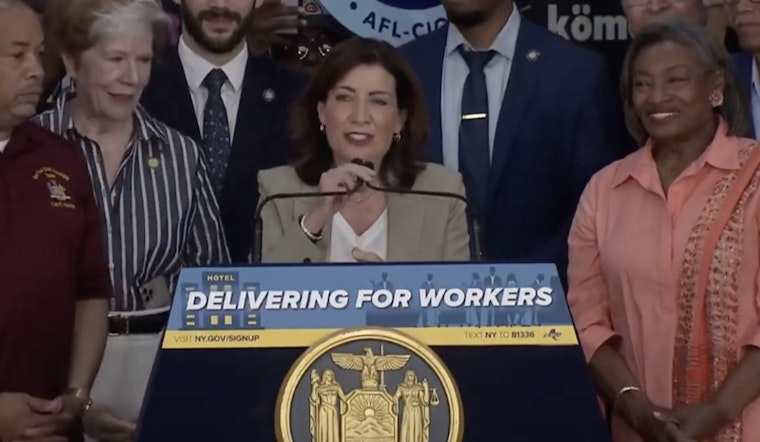
In a significant move toward economic recovery, New York Governor Kathy Hochul, flanked by labor leaders, announced the complete repayment of the state's massive Unemployment Insurance (UI) Trust Fund debt to the federal government. This action, as reported by the Office of the Governor, comes after a deep plunge during the COVID-19 pandemic when the state's UI Trust Fund balance dived from a positive $2.5 billion to zero, compelling the state to borrow to pay claims.
With this nearly $7 billion debt cleared, Governor Hochul highlighted the dual benefits of the payoff—increasing unemployment benefits for those in need and reducing costs for employers, as previously reported, this could save employers an average of $100 per employee in 2026 and $250 in 2027 for businesses is driving our economy forward, and putting money back into New Yorkers' pockets which was described as bringing both long-overdue relief to workers and a cut in costs for business owners.
According to the Office of the Governor's announcement, starting in October, the maximum weekly UI benefit will jump from $504 to $869. The increase aims to align New York's benefits with those of other states, while changes to the taxable wage base are intended to bolster the UI Trust Fund for future stability.
New York State Department of Labor Commissioner Roberta Reardon lauded the payoff as a win for both workers and businesses with an increase in benefits coming at a critical time for the unemployed and a cost reduction for businesses, this is the kind of real-world support expected from leadership at a time of need. Hotel and Gaming Trades Council President Rich Maroko added to the sentiment, expressing relief for workers ahead of the industry-wide contract expiration next year. Meanwhile, the legislative leaders, including Senate Majority Leader Andrea Stewart-Cousins and Assembly Speaker Carl Heastie, backed the Governor's moves as vital for the state's economy.
Assemblymember Harry Bronson touted the victory for both businesses and workers in boosting New York's economic foundation, while acknowledging efforts of labor groups like AFL-CIO and the Business Council. In similar vein, Assemblymember Judy Griffin underlined the significance of this measure in bolstering both businesses, especially smaller ones grappling with unsustainable rates, and worker benefits across New York.





