

























































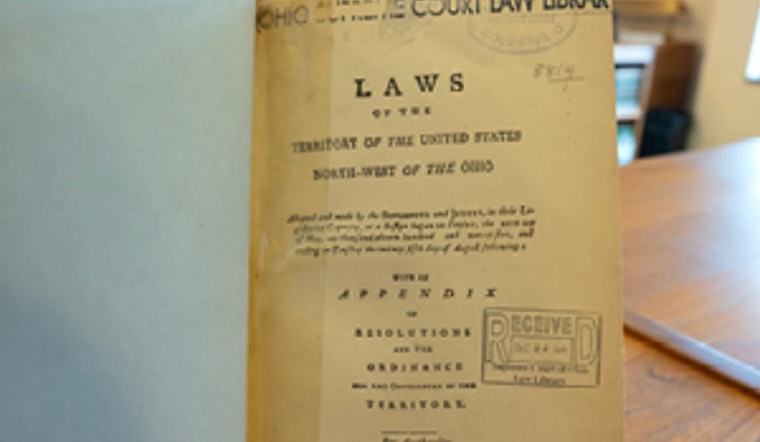
The Northwest Ordinance, a monumental piece of American history, hits its 238th anniversary and still resonates today, particularly in Ohio. Adopted on July 13, 1787, by the Confederation Congress, the ordinance laid the groundwork for justice in the future state of Ohio, setting up a legal system that prioritized the rights of all its citizens, an ethos that endures in today's Ohio Supreme Court. The court houses an artifact as a symbol of this legacy, a digitized book outlining the early laws of the Northwest Territory, which is now accessible to the public, courtesy of the Ohio Supreme Court's dedication to preserving its legal heritage.
The significance of the Northwest Ordinance is multifaceted, it not only provided the early framework for self-governance in territories like Ohio but it also etched civil liberties and educational ideals into the bedrock of what would grow to be the United States, making the Ohio Supreme Court's old book, containing these pioneering rules, a treasure beyond mere age, because it reflects a transformative period in governance whose principles shaped laws and ultimately society, and justice in Ohio, continuing up to the present moment. This ordinance predated and planned for state constitutions, defining a path for their admission to the Union and the values they would uphold, establishing that schools should forever be encouraged, which is reflected in the Supreme Court's engagement with civic education today.
As the groundwork for many state constitutions, the ordinance championed rights such as trial by jury, habeas corpus, and religious freedom, elevating individual freedoms as pillars of the nation, making the upcoming 250th anniversary of America, set for 2026, an apt time to revisit and celebrate these American values. "The Northwest Ordinance not only as a foundation of our state’s history but as a timeless testament to the power of the judiciary to create a more just future," quoted the Chief Justice of the Supreme Court of Ohio, reflecting on the document's enduring legacy, according to a report by Court News Ohio.





