

























































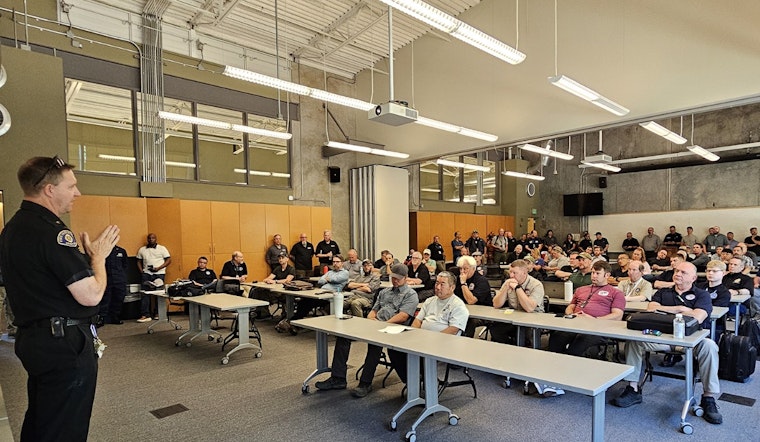
Emergency response teams are upping their game in preparation for the 2026 FIFA World Cup, and Seattle just played host to a major strategy session. The inaugural Spectrum Cyclone event, which took place from July 14-18 at Seattle's Joint Training Facility, saw agencies from across North America converge to train for what's expected to be an extremely complex communications environment during the upcoming tournament. The Washington Emergency Management Division spearheaded the effort to ensure that our public safety backbones can keep up, given that the World Cup is predicted to strain urban infrastructure significantly.
According to a report by the Washington state's military department, the training sessions are intended to simulate intense situations such as dealing with massive crowds and facing digital and RF (radio frequency) interference challenges. The aim was to nearly seamlessly meld multiple agencies' communication systems, a crucial task during high-stakes international events. Jon Lee, a Washington statewide interoperability coordinator, highlighted the drills' critical nature: "The World Cup will bring unprecedented traffic, scrutiny, and complexity to our cities. We need to be ready for anything—from a downed radio repeater to a coordinated digital intrusion—and that preparation starts with integrated training like this."
Not only did this training emphasize cross-agency communication, but it also offered a glimpse into emerging tech applications that could change the game for emergency response. Among the new tools tested was a virtual reality (VR) platform designed to visualize and map spectrum activity, helping responders to "see" the invisible and identify potential sources of interference. "The technology allows responders to walk through a digital model of the RF environment, pinpointing sources of interference or signal anomalies in seconds instead of hours," explained Brandon Smith, emergency communications coordinator-telecommunications specialist at DHS Cybersecurity and Infrastructure Security Agency (CISA).
The exercise wasn’t just a chance to practice responding to incidents—participants also worked on prevention and mitigation strategies. Scenarios aimed to expose weaknesses that could be shored up before they're exploited in real-life situations. Stressing the high stakes of the training, Lee said via the Washington Military Department news, "RF interference can cripple our entire communications system. If a single frequency goes dark or a control system is hacked, it could delay emergency response or put lives at risk. Just because a system goes down does not mean we can pause the event, we must continue working. These exercises help us uncover gaps before they’re tested in the real world." The event signifies the first large-scale training in Washington and a crucial step towards a more integrated and resilient emergency communications infrastructure.
With the next World Cup set to be the most extensive yet, featuring more teams and matches across North America, the preparations in Seattle are a snapshot of what host cities are doing to prepare for the massive influx of visitors and activities. Seattle is among the confirmed host cities and is actively bracing for the deluge of international visitors and the attendant demand on public services and systems.




