

























































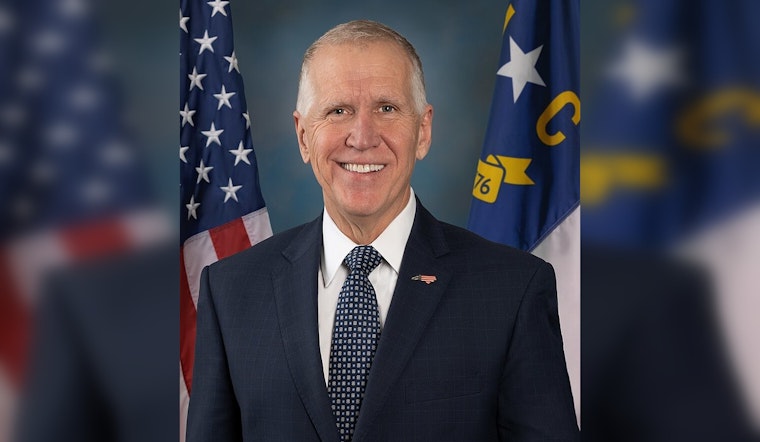
Senator Thom Tillis (R-NC), together with thirteen other Senate Republicans, has made a move to expedite the funding processes of the National Institutes of Health (NIH), as reported by Tillis's own office. In a letter addressed to Russell Vought, the Director of the White House Office of Management and Budget (OMB), these senators have pushed for the swift implementation of allocated resources that are crucial for research endeavors in areas such as cancer, cardiovascular disease, and rare pediatric disorders.
According to a statement from Tillis's office, the corresponding Fiscal Year (FY) 2025 Full-Year Continuing Appropriations and Extensions Act underpins these initiatives. The senatorial group posits that the funding is not only key to improving American health outcomes but also vital to maintaining the economic strength our nation harnesses through biomedical innovation, and in staying ahead in the global race, particularly against competitors like Communist China. However, they have expressed concern that the current pace at which these funds are being distributed could place significant strain on important research progress, and, by extension, American jobs reliant on such research.
These concerns extend beyond the immediacy of financial distribution to the impact that potential delays or withholdings could have on treatment advancements and America's competitive stance in biomedical sciences. As outlined by the senators, "Suspension of these appropriated funds — whether formally withheld or functionally delayed — could threaten Americans' ability to access better treatments and limit our nation's leadership in biomedical science," suggesting that the stakes of efficient fund management are tied directly to both national health and global prestige.
Moreover, the coalition, which includes Senators from varying states, emphasizes the importance of gold standard research accompanied by accountability and transparency. They express confidence in Secretary Kennedy and Director Bhattacharya to steer the NIH funding toward projects with both scientific merit and national interest alignment. "We share your commitment to ensuring NIH funds are used responsibly and not diverted to ideological or unaccountable programs," they stated, underscoring the need for integrity in the dispersal of these critical resources. The senators conclude by highlighting the role of these funds in maintaining public trust in the NIH and the imperative of continued progress against major health challenges.
The letter effectively amplifies an ongoing dialogue on the importance of prioritizing health research funding and ensuring that such appropriations reach their intended initiatives promptly and efficiently. The bipartisan consensus seems to be that, in a time where innovation and health are more intertwined than ever, roadblocks to research funding could have far-reaching consequences.



