

























































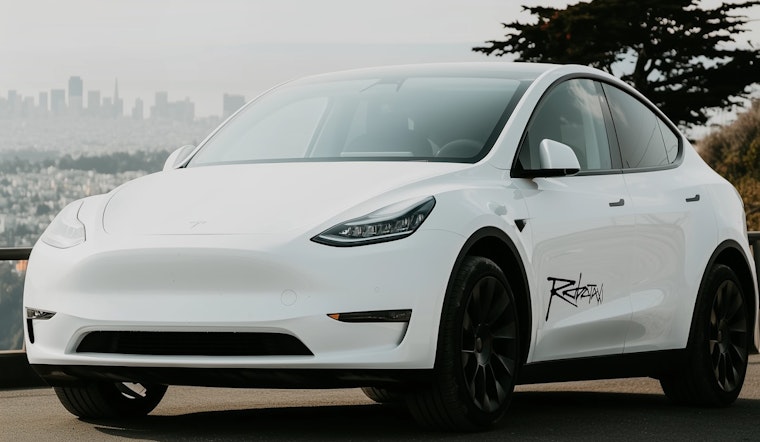
Tesla just announced it's launching robotaxis across the Bay Area this weekend, complete with internal employee memos and accelerated timelines. There's just one small hiccup: the company doesn't actually have permits to operate autonomous vehicles in California. And by "autonomous," we mean vehicles with human drivers behind the wheel—because that's Tesla's version of a robotaxi.
The oversight might be embarrassing for most companies, but for Tesla it's becoming something of a trademark move. California's Public Utilities Commission had to clarify the obvious Friday: according to ABC7 News, "Tesla has not received approval from the CPUC to offer autonomous passenger service to customers, paid or unpaid, with or without a driver (nor has the company applied)." The Department of Motor Vehicles piled on, noting that Tesla's decade-old testing permit doesn't cover commercial passenger service.
The Gap Between Vision and Paperwork
Elon Musk has been promising that Tesla's robotaxi service will reach "half the population of the U.S." by year's end. Apparently, nobody checked whether Tesla had permission to operate in San Francisco—the city where actual autonomous vehicles have been navigating streets for years and regulatory frameworks have been battle-tested through real deployment.
Compare this to Waymo's methodical approach. Hoodline Bay Area covered how the Google-owned company obtained proper approvals to expand across 85 square miles of the Bay Area, now providing around 250,000 paid rides weekly with regulatory blessing. Tesla's strategy appears to be announce first, apply for permits later.
What Tesla does have is a Transportation Charter-Party Carrier permit for traditional taxi service with human drivers. The San Francisco Standard notes this specifically prohibits autonomous operations. The workaround seems to be putting Tesla employees behind the wheel of cars using Full Self-Driving software and calling it a robotaxi—which is like calling a training-wheels bicycle a motorcycle.
Austin's Educational Moments
Tesla's confidence about California expansion becomes more puzzling when you look at what's been happening in Austin, where the company launched robotaxis in June. The service has provided some illuminating lessons about the current state of Tesla's technology.
Joe Tegtmeyer, a Tesla enthusiast who flew to Austin specifically to test the robotaxis, had what you might call a character-building experience. During one of his rides—on the very day Tesla expanded its Austin service area—Fortune reported that his Tesla tried to proceed through a railroad crossing as a train approached. The safety observer had to intervene to prevent what could have been a very expensive teaching moment.
Tegtmeyer's response to nearly being hit by a locomotive? He posted that "there's a little bit of work that still needs to be polished up with the software, but otherwise it's been just an amazing opportunity." Torque News reported he still graded the trip an "A," dropping it from an "A+" only because of the train incident. That's some serious curve grading.
Other Austin adventures have been captured on video and shared widely across social media. NBC News documented 13 separate incidents where Tesla robotaxis appeared to break traffic laws or behave oddly—dropping passengers in intersections, driving on the wrong side of double yellow lines, and exceeding speed limits. It's been quite the viral marketing campaign, just not necessarily the kind Tesla was hoping for.
California's Regulatory Reality Check
Tesla's permit problem isn't happening in isolation. The company is currently battling California's DMV in administrative court over allegations that it misled consumers about Autopilot and Full Self-Driving capabilities. The San Francisco Chronicle reported that hearings are underway in Oakland, where the DMV wants to suspend Tesla's manufacturing and sales licenses for at least 30 days.
The irony is thick—Tesla operates major facilities in Fremont and Palo Alto, employing over 10,000 workers, yet seems perpetually surprised by California's regulatory requirements. CNBC detailed how the DMV's case focuses on Tesla using terms like "Autopilot" and "Full Self-Driving" for systems that need constant human babysitting—which under California law doesn't qualify as autonomous.
California's approach to autonomous vehicles differs dramatically from Texas's more permissive stance. The Golden State requires permits from both the DMV and CPUC, detailed safety protocols, comprehensive insurance, and extensive operational data sharing. CNBC noted that California recently tightened these requirements even further, which might explain why Tesla's permit application remains notably absent.
Politicians Aren't Buying It
State lawmakers have been refreshingly direct about Tesla's regulatory end-run. Senator Scott Wiener delivered what might be the quote of the weekend: "If Tesla actually deploys its AVs in San Francisco without permits, these vehicles should be seized and impounded," he told The San Francisco Chronicle. "We have permitting and safety rules for a reason. Elon Musk isn't exempt from those rules."
Assemblymember Catherine Stefani suggested that Musk is essentially playing regulatory chicken with the state. "Elon Musk is daring the state to stop him—and if California regulators don't act, they're handing him the keys to ignore every safety rule we have," she told The San Francisco Standard.
Transportation advocacy groups also raised concerns. Luke Bornheimer from Streets Forward argued that more autonomous vehicles would "introduce a dangerous element to the city" and increase car trips, conflicting with San Francisco's environmental goals. He told ABC7 News this represents "the opposite direction that our city needs to be moving in."
Business Pressures and Market Realities
Tesla's urgency to launch robotaxis becomes clearer when you consider the company's recent financial performance. TeslaNorth reported that shares dropped over 8% after Tesla's latest earnings announcement showed declining revenues. Musk has positioned autonomous driving as the key to Tesla's future profitability, making regulatory approval essential for maintaining investor confidence.
The broader autonomous vehicle industry in California has faced significant turbulence recently. General Motors' Cruise went from industry darling to regulatory pariah after a high-profile incident where one of its vehicles dragged a pedestrian 20 feet. This led to heightened scrutiny across the entire sector, making Tesla's aggressive timeline even more eyebrow-raising.
Tesla's apparent solution involves putting safety monitors behind the wheel rather than in passenger seats, potentially allowing the company to operate under existing ride-sharing regulations while using autonomous technology. Electrek offered a particularly blunt assessment, characterizing this as essentially launching "an Uber service in the Bay Area with employees at the wheel who use FSD, and it is going to call it 'Robotaxi.'"
The San Francisco Paradox
The location choice adds another layer of absurdity to this story. San Francisco has become ground zero for autonomous vehicle testing, with multiple companies operating fleets and residents routinely encountering driverless cars. It's where regulatory frameworks for autonomous vehicles have been developed, tested, and refined through years of real-world deployment.
For Tesla to announce a robotaxi launch in this environment without securing proper permits suggests either remarkable confidence in the company's regulatory strategy or a fundamental disconnect from how autonomous vehicle oversight works in California. Given Tesla's decade-plus presence in the state and major facilities here, it's hard to blame this on unfamiliarity with local regulations.
Federal investigations into Tesla's Autopilot system add yet another wrinkle. CNBC reported that the National Highway Traffic Safety Administration has been evaluating Tesla's driver assistance technology after multiple crashes involving emergency responder vehicles—exactly the kind of incidents that make regulators nervous about autonomous vehicle deployment.
Despite these regulatory roadblocks, Tesla remains bullish on rapid expansion. The company has flagged Arizona, Florida, and Nevada for robotaxi launches by year's end. Whether California will be part of that timeline depends on Tesla's willingness to work within the state's established regulatory framework rather than around it.
The whole situation reflects a classic Silicon Valley tension between "move fast and break things" innovation culture and "follow the rules and keep people safe" regulatory oversight. Tesla's permit predicament suggests that sometimes the biggest obstacle to the future isn't technology or engineering—it's making sure you've filled out the right forms first.




