

























































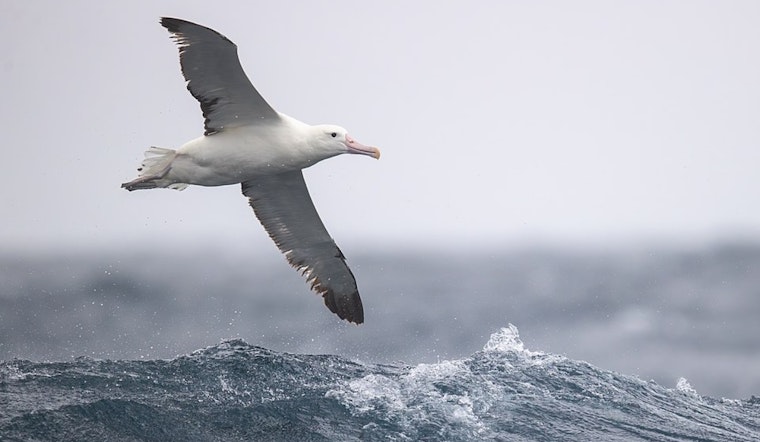
In a substantial advancement of drone technology, researchers at the University of Cincinnati are developing a new type of unmanned aerial vehicle (UAV) that emulates the flight of albatrosses, the ocean-crossing birds known for their impressive airborne efficiency. The project is led by UC's Assistant Professor Sameh Eisa, an aerospace engineering expert who has secured a $700,000 grant from the Defense Advanced Research Projects Agency (DARPA) for this innovative endeavor, aiming to implement biomimetic design strategies in the next generation of drones.
Hoping to replicate the albatrosses' dynamic soaring technique, Dr. Eisa and his team are tackling the complex challenges of animal-inspired flight controls. This method allows the birds – and potentially drones – to capitalize on natural wind currents for sustained flight without constant wing flapping, a feat that Dr. Eisa and his team aim to achieve through what they term "a natural extremum-seeking system," as reported by UC News. The system involves the UAV identifying the optimal pitch, yaw, roll, and airspeeds for energy efficiency, drawing direct inspiration from the albatrosses' ability to fly long distances over oceans. As the birds leverage wind currents to gain altitude before gliding downwards, capturing the energy provided by gravity and the wind, Dr. Eisa's research is poised to provide a breakthrough in UAV technology.
The astonishing feat of these birds isn’t solely attributed to their 11-foot wingspans, but also to how they utilize their sense of smell to gauge wind conditions for fine adjustments while soaring. Eisa pointed out that the albatrosses can "literally have a nose for wind," using this to maintain efficient flight patterns. This intricate sensing mechanism is essential for achieving the autonomous soaring capabilities envisioned for the new drones. By integrating such capabilities, the drones would essentially be required to measure wind speeds and directions, adapting their course accurately in real-time, which Dr. Eisa conceded is "unbelievably complicated," yet necessary to attain albatross-like efficiency.
A noteworthy aspect of the project highlights how the birds can travel hundreds of miles a week, with some logging distances equivalent to 20 trips between Earth and the moon over their lifespan. This biological prowess has been translated into synthetic applications, with Eisa's team pushing the limits of artificial intelligence and computational power. They've been tasked to develop algorithms that can process and react to data nearly instantaneously, reflecting the real-time computations albatrosses naturally perform for optimal flight paths. It's a daunting technological challenge, but one that, if conquered, could revolutionize the drone's role in applications ranging from defense to environmental monitoring.
The innovation derived from this biomimicry approach extends the frontiers of UAV design, potentially yielding drones capable of prolonged flight with minimal energy expenditure. As the technological landscape continually aspires to merge natural phenomena with human ingenuity, endeavors such as Dr. Eisa's highlight the boundless potential of interdisciplinary research, infusing the ancient art of sailing the skies with the futuristic domain of robotics.





