

























































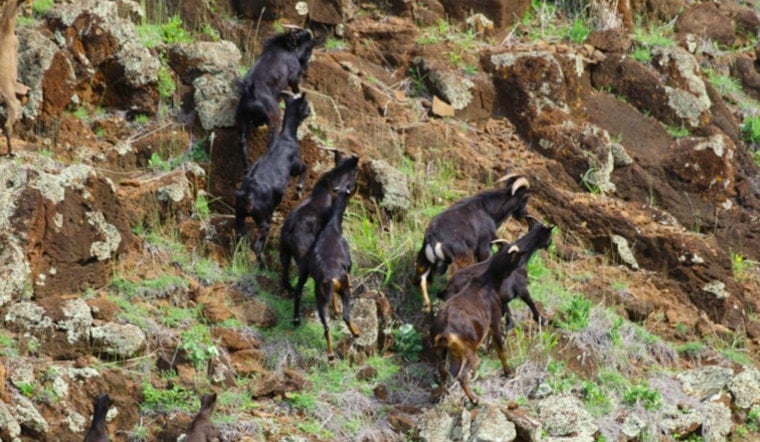
Hawaiian state officials are shuttering several Big Island nature reserves this August for what has become an increasingly urgent battle against feral animals threatening one of the islands' most endangered species. The temporary closures target the same four protected areas that have become battlegrounds in the fight to save the critically endangered palila bird from extinction.
According to the Department of Land and Natural Resources, animal control activities targeting feral goats, sheep and mouflon hybrids are scheduled for August 2025, with the Division of Forestry and Wildlife conducting operations using both ground-based and aerial methods. The closures affect the Mauna Kea Forest and Ice Age Natural Area Reserves, the Palila Mitigation Lands, and the Ka'ohe Game Management Area.
Court-Mandated Conservation Efforts
The aerial shooting operations stem from a federal court order mandating the removal of sheep and goats from critical palila habitat, as reported by Governor Josh Green's office. This legal requirement traces back to one of the most unusual environmental lawsuits in American history—Palila v. Hawaii Department of Land and Natural Resources—where the bird itself appeared as the named plaintiff.
The court orders, beginning in 1979, found the state in violation of the Endangered Species Act by failing to protect the palila from destructive ungulate feeding practices. American Bird Conservancy notes that a court-ordered agreement from 1998 established that a minimum of two aerial hunts per year were necessary to have any chance of removing sheep and goats from Mauna Kea.
Species on the Brink
The stakes couldn't be higher for this critically endangered finch-billed Hawaiian honeycreeper, found only in Hawaii and classified as endangered since 1967. The population has declined catastrophically, according to American Bird Conservancy, dropping 66 percent in a single decade with fewer than 2,200 birds remaining.
The palila has a critical ecological relationship with the māmane tree, whose seeds comprise about 90 percent of the bird's diet. Introduced sheep and goats browse these endemic trees, destroying the dry forest habitat essential for the species' survival. Mongabay reported that Hawaii faces the most dire bird crisis of any state, with 31 bird species having gone extinct since human arrival.
Escalating Pattern of Closures
What makes this August closure particularly significant is how it fits an accelerating pattern. The same reserves were closed in July for identical operations, and before that in February, reflecting both the urgency of the palila's plight and the persistent challenge of permanently removing feral ungulates from the mountainous terrain.
The historical context reveals the depth of the problem. Wikipedia documents that goats and sheep were released in the late 18th century and became feral, with populations reaching an estimated 40,000 before being reduced to 200 by 1950. However, hunter interest in the remaining animals as game prevented complete eradication, leading to the current crisis.
Access Restrictions and Salvage Operations
During control operations, public access to affected areas will be restricted, with limited access for animal salvage purposes available by permit only, as detailed by Hawaii News Now. The Hale Pohaku, Kilohana, and Puʻu Koʻohi gated entrances to Units A and G, along with the gate behind Gilbert Kahele State Recreation Area, will be locked during operations.
The salvage program serves dual purposes—preventing waste of animals killed during control operations while providing hunters access to game meat. For those interested in participating in animal salvage, permits and additional information are available through the DOFAW Hilo office at (808) 974-4221.
The success of these increasingly frequent operations will ultimately determine whether future generations will hear the palila's distinctive call echoing through Mauna Kea's māmane forests, or whether this unique species will join Hawaii's growing list of extinct birds.





