

























































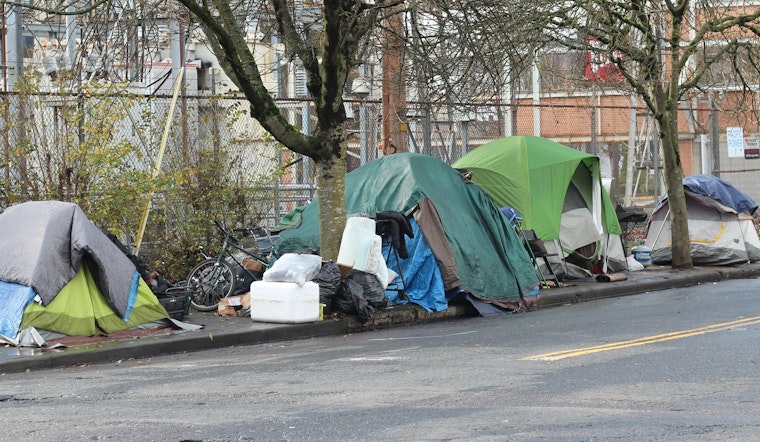
Governor Gavin Newsom announced yesterday the launch of a comprehensive statewide task force designed to dismantle homeless encampments while connecting residents to housing and services. The State Action for Facilitation on Encampments (SAFE) Task Force will target camps along state rights-of-way in California's ten largest cities, including Sacramento, marking the most ambitious coordinated effort yet to address the crisis.
The task force will begin operations within 30 days, according to the Times of San Diego. The announcement comes as California grapples with housing over 187,000 homeless individuals—nearly a quarter of the nation's unhoused population.
Multi-Agency Coordination Takes Center Stage
California's SAFE task force brings together state agencies responsible for emergency management, social services, health care, substance use support, resource management, and public safety, as reported by the Governor's office. The coordination represents a significant shift from previous ad-hoc approaches to encampment clearing.
The scope of the challenge is substantial. Since July 2021, Caltrans has removed over 18,000 encampments and cleared approximately 334,440 cubic yards of debris along state rights-of-way, as noted by SM Mirror.
California Bucking National Homelessness Trends
The announcement arrives amid encouraging data suggesting California's homeless strategy may be showing results. Last year, homelessness increased nationally by more than 18%, but in California by only 3%, a lower rate than 40 other states, as per the Times of San Diego.
Regional improvements have been even more dramatic. Los Angeles County reported a 9.5 percent decline in unsheltered homelessness, while the City of Los Angeles recorded a 7.9 percent decrease, as detailed by Davis Vanguard. Riverside County reported a 19 percent decrease in unsheltered homelessness, while Sonoma reported a 22.6 percent reduction in total homelessness.
Local Officials Welcome State Support
Sacramento Mayor Kevin McCarty embraced the announcement, acknowledging the complexity of the challenge. "Great, we could use the help," McCarty told ABC10. "Let's face it, homelessness is a number one issue in Sacramento and cities across California, and we can't do it alone."
Los Angeles Mayor Karen Bass also praised the initiative, noting that "homeless encampments on highways and freeways are under state jurisdiction," highlighting the jurisdictional complexities that have hampered previous efforts, as mentioned by SM Mirror.
Expert Concerns About Timeline
However, experts urge caution about the 30-day timeline. Dr. Margot Kushel, who directs the Benioff Homelessness and Housing Initiative at UCSF, supports the approach but worries about timing. "We know that you can very effectively resolve encampments by bringing the services and the housing that people in those encampments need," Kushel told ABC10, though she noted it takes time to build trust.
The task force also faces fundamental implementation challenges. Alex Visotzky, senior California policy fellow for the National Alliance to End Homelessness, noted that "the only proven way to resolve an encampment is to move people into housing and connect them with the other services they need," according to CalMatters.
Contrasting Federal Approach
The announcement comes as President Trump's administration cracks down on encampments at the federal level, with Trump signing an executive order pushing cities and states to use law enforcement to get people off the streets, as reported by CalMatters. Newsom's office explicitly contrasted their approach, stating that "unlike the haphazard strategies employed by the Trump Administration, California's SAFE Task Force brings together each of the tools created by Governor Newsom to clear encampments and connect people with the care they need."
The state emphasizes accountability through data tracking via accountability.ca.gov, which brings together thousands of locally reported data points to provide an accurate picture of local communities' work to address homelessness, as stated by the Governor's office. As the SAFE Task Force prepares to deploy, California's approach represents both an escalation of enforcement and an attempt to distinguish itself from purely punitive federal strategies.





