

























































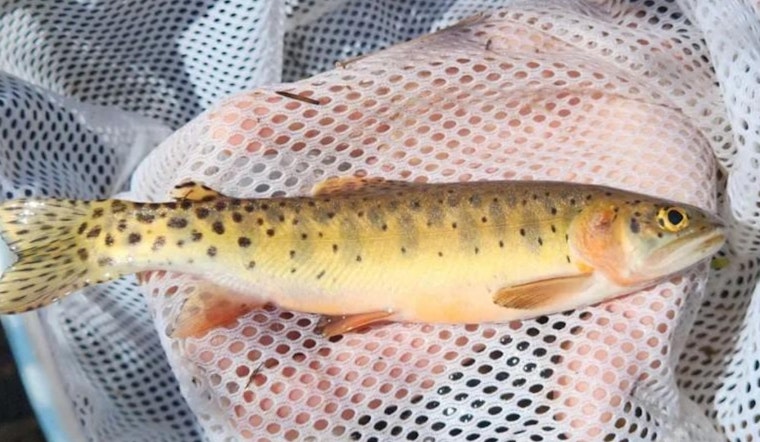
Amidst the haze of the Stoner Mesa Fire, Colorado Parks and Wildlife (CPW) and the San Juan National Forest teamed up in a race against time to salvage a population of native cutthroat trout. Known as the "Uncompahgre cutthroat trout," this distinct green lineage faces the threat of wildfire, prompting swift action from concerned biologists. CPW’s Southwest Region Senior Aquatic Biologist Jim White and Kade Jackson, an aquatic biologist for the CPW Durango area, led the operation, informed by an urgent collaboration with firefighting personnel.
The fire had already devoured 3,579 acres by the time the team reached Wildcat Creek, a tiny tributary harboring these precious fish. CPW’s Roaring Judy Fish Hatchery was the chosen sanctuary, a journey of approximately 165 miles made possible by a truck loaded with fish buckets, according to Colorado Parks and Wildlife. These efforts led to the successful capture and transfer of 266 Uncompahgre cutthroats, surpassing the goal of 250, despite the wildfire’s relentless encroachment.
At the hatchery, which lies north of Gunnison, the fish were tucked away in a specific isolation unit, "so that there is no risk of any potential disease spreading from the wild fish to the population of trout and kokanee salmon currently being raised at the facility," according to Hatchery Manager Seth Firestone, as per Colorado Parks and Wildlife. The rescued trout are now adapting to a new diet and being monitored as they grow in their safe, temporary home. This intervention is pivotal, as post-wildfire conditions, including the potential influx of sediment and ash into waterways, can have devastating effects on fish populations.
The collaboration's success hinged on "constant communication with Stoner Mesa Fire Incident Personnel," San Juan National Forest Supervisory Aquatic Biologist Clay Kampf explained, ensuring the biologists' safety during the operation. Unfortunately, even with the fish temporarily secure, the Stoner Mesa Fire later inflated to 7,123 acres, stressing the importance of continual vigilance for aquatic habitats. The CPW's plan now is to either reintroduce the fish to their original home in Wildcat Creek or replicate the population elsewhere in the Dolores River Basin, White suggested in a previous interview with CPW.




