

























































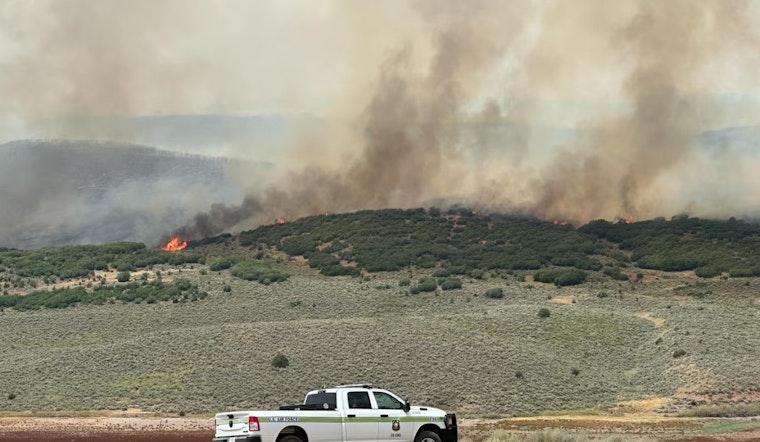
The onslaught of wildfires continues to ravage parts of Colorado, with the Lee Fire and its companion blazes tirelessly pushing boundaries and forcing more evacuations. The Lee Fire, as reported by 9News, has become Colorado's fifth-largest wildfire, consuming more than 120,000 acres and barely contained at 4%. Initiated by lightning strikes on August 2, this inferno has, together with the smaller Grease Fire, merged to form a relentless front that has prompted officials to adopt a three-stage evacuation protocol to methodically move residents out of harm's way.
As the fires continue to grow, so do the ramifications. The Elk Fire, which has affected Rio Blanco and Garfield counties, has destroyed five homes, with more than 130,000 acres burned. According to a report from KDVR, the Elk Fire, though considerably smaller than the Lee Fire, still wields its destructive force, with 75% containment and over 14,500 acres charred. The state's Governor has declared disaster emergencies for all affected areas, deploying the Colorado National Guard to assist in particularly threatened zones like the Crosho Fire's domain, which remains uncontained and has necessitated evacuations.
Meanwhile, on-the-ground perspectives reveal the human cost of wildfire's capricious spread. Trina Kennedy, a local high school counselor, told CPR, "I don't think we ever really thought about it being wiped out by a wildfire until it was coming at us.” Kennedy reflects a sentiment felt across communities as evacuations transform from precautionary steps to immediate imperatives.
The firefighting effort against these flames has been unrelenting, with over 1,200 personnel deployed and diligently working under the stress of extreme conditions. The critical weather pattern includes elements such as deep drought and high winds that are expected to continue, complicating suppression activities as firefighters attempt to strategically reduce the advance of the fire in especially vulnerable areas. According to CPR, these dedicated men and women are focused heavily on the southern portion of the Lee Fire, where new evacuations had to be enacted in Garfield County.





