

























































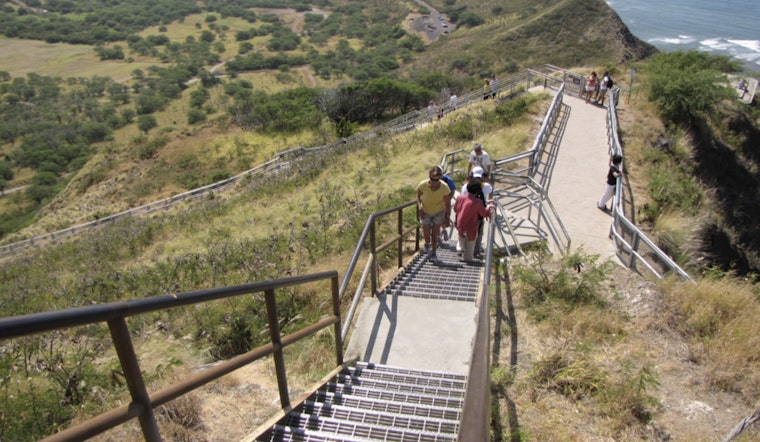
A 70-year-old man was transported to a Honolulu hospital in serious condition Sunday morning after suffering severe dehydration on Diamond Head Trail, marking another heat-related emergency on Oahu's most popular hiking destination. The incident occurred around 10:25 a.m. as temperatures climbed and shade became increasingly scarce along the exposed crater slopes.
According to Honolulu Star-Advertiser, Honolulu EMS responded to the emergency call and found the elderly hiker suffering from severe dehydration. Hawaii News Now reported that emergency responders quickly assessed and treated the hiker before transporting him for further medical care.
A Challenging Trail That Demands Preparation
The Diamond Head Crater Trail presents significant challenges that many visitors underestimate. As detailed by Hawaii Division of State Parks, the 0.8-mile hike gains 560 feet in elevation as it ascends from the crater floor in steep and strenuous conditions. The state monument encompasses over 475 acres, with hikers facing hot, dry slopes that offer little relief from the sun's intensity.
State officials emphasize essential safety measures for trail visitors. According to Division of State Parks, hikers should "wear good walking shoes, bring water, and wear a hat and sunscreen" while allowing 1.5 to 2 hours for the complete hike. Despite these clear warnings, rescue operations have become disturbingly routine on the trail.
Pattern of Emergency Rescues
Sunday's incident represents the latest in a series of medical emergencies that have plagued Diamond Head Trail throughout 2025. Previous Hoodline coverage has documented multiple rescues involving elderly hikers, with many incidents occurring during similar mid-morning timeframes when temperatures peak. The pattern suggests that many visitors continue to underestimate the physical demands of the seemingly short but challenging ascent.
When these emergencies occur, rescue operations typically involve substantial resources. As reported by Hoodline, the Honolulu Fire Department typically deploys operations involving 6 units and 17 personnel using both ground and air support. Teams hike up the trail to reach distressed hikers while others prepare landing zones for helicopter evacuations when necessary.
Heat and Timing Factors
The timing of Sunday's incident—mid-morning as temperatures climbed—reflects a dangerous pattern observed in previous emergencies. Historical data from Honolulu Star-Advertiser shows that temperatures in the mid-to-upper 80s with little cloud cover create particularly hazardous conditions for unprepared hikers. Multiple hikers can succumb to heat-related illnesses in a single day under these conditions.
Hiking experts consistently recommend tackling Diamond Head during cooler parts of the day, particularly early morning hours before the sun reaches peak intensity. Island Hopper Guides emphasizes the critical importance of staying hydrated, advising hikers to "drink plenty of water throughout the hike to avoid dehydration."
Trail Access and Operations
Diamond Head State Monument operates daily from 6 a.m. to 6 p.m. with last entry at 4:30 p.m., according to the Division of State Parks. The trail requires advance reservations for out-of-state visitors, a system implemented to manage overcrowding, though this hasn't addressed the underlying preparation issues that continue to lead to medical emergencies.
As rescue operations become increasingly common on Diamond Head Trail, Sunday's incident serves as another stark reminder of the serious risks facing unprepared hikers. The combination of challenging terrain, intense heat, and tourist overconfidence continues to create a perfect storm for medical emergencies on what remains one of Hawaii's most iconic but demanding hiking experiences.




