

























































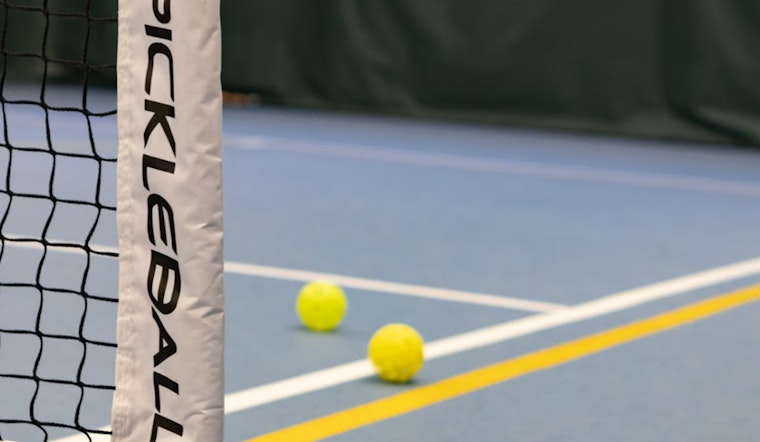
The sound of plastic paddles echoing through a former Walmart space in downtown Honolulu has become an unexpected soundtrack to urban renewal. Pickles at Forté, the city's first indoor pickleball facility, has transformed a vacant retail space into a bustling community hub that stays busy until midnight on weekdays.
The facility opened in January at 1032 Fort Street Mall, according to Aloha State Daily, filling a space that had been empty since Walmart closed in early 2023. Martina Kostalova, director of operations, told Hawai'i Public Radio that the courts have brought paying customers to downtown, with many taking advantage of the extended hours.
"It's a mostly young crowd," Kostalova explained. "Before we even opened, we asked people, and basically they told us that the only reason they used to stop on public courts was because the lights went out at 10 p.m., and they would totally stay until midnight, and they do."
Rapid Expansion Plans
The success has been so immediate that developers are fast-tracking expansion. Aloha State Daily reported that the developer is targeting phase two construction to begin by year-end or early 2026, with temporary courts planned for the second floor in the coming months.
The full vision includes approximately 10 pickleball courts, a restaurant, full locker rooms, and other amenities. Plans for the second floor envision "a larger format sports bar with an open-air lanai overlooking Fort Street Mall," according to Aloha State Daily.
The facility has already expanded beyond pickleball, with Teapresso Bar opening earlier this year and a golf simulator running for about two months. The simulator is available to both members and the general public at $50 per hour for non-members.
Cornerstone of Bigger Vision
What makes this pickleball story significant is its connection to a much larger downtown revitalization effort. Avalon Group CEO Christine Camp, whose company purchased the former Walmart building for $38.25 million last February, is a driving force behind a proposed downtown business improvement district, as reported by Hawaii News Now.
"They've done it all over the mainland, but our prime example is Waikīkī," Camp told Hawai'i Public Radio. "Some key leaders 20 years ago decided that this was time for the businesses to really take over and add services because status quo was not acceptable, and they were willing to pay to have those improvements."
The proposed business improvement district, introduced as Bill 51, would expand district boundaries to include areas bounded by Nuuanu Avenue, South Beretania Street, Richards Street, and Nimitz Highway. The expanded district would operate with a first-year budget of $1.9 million, funded primarily through property assessments.
Addressing Downtown's Challenges
The push comes as downtown grapples with significant post-pandemic challenges. The area has seen major retail closures including Walmart, Longs Drugs, and Ross, leaving behind vacancies that have contributed to the district's struggles.
Business leaders testified about safety concerns and maintenance issues during public hearings. University student Taylor Ogata expressed safety concerns, saying "I don't always feel safe" and that she feels "uncomfortable walking alone or passing through certain streets."
The pickleball facility represents a different approach—demonstrating how private investment in community amenities can draw people back to an area that many had written off. Players like Dayton, who drives from Kahaluʻu specifically for the downtown location, praised its convenience and amenities.
Model for Success
The Honolulu City Council unanimously passed Bill 51 on its first reading in July, with a public hearing expected on September 3rd as part of the legislative process. The proposal uses Waikīkī's business improvement district as a model, which has contributed to significant crime reductions in its coverage area.
Meanwhile, the pickleball courts continue drawing players from across Oahu, creating the kind of foot traffic and community energy that downtown has been missing. The facility is part of Avalon Group's larger plan to redevelop downtown areas, with the company investing more than $1 billion toward that goal.
Whether pickleball can truly serve as a catalyst for downtown's broader revival remains to be seen. But for now, in a former retail space that once symbolized urban decay, the sound of paddles hitting plastic balls suggests something is working in downtown Honolulu's ongoing transformation.





