

























































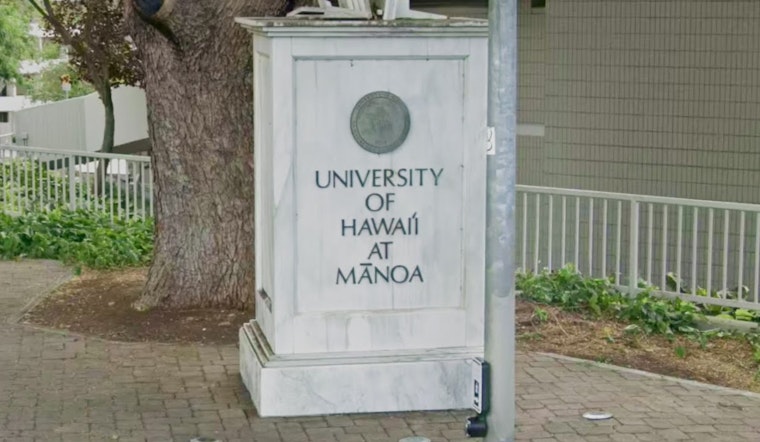
Federal funding cuts are dismantling critical climate research programs at the University of Hawaii just as rising sea levels threaten island communities. The cuts have eliminated vital scientific work that helps coastal areas prepare for environmental challenges, leaving Hawaii's adaptation efforts in jeopardy.
According to the University of Hawaii System News, a recent round of federal funding cuts terminated a $3 million grant from the Office of Naval Research to UH Manoa. The grant supported the Coastal Research Collaborative (CRC), which provided crucial data and high-resolution modeling of sea level rise impacts, heat exposure and precipitation extremes. As reported by Hawaii Public Radio, University of Hawaii President Wendy Hensel announced that cuts had increased to $36 million, affecting at least 48 projects.
Research Programs Under Fire
The Coastal Research Collaborative employed 15 people, including graduate students, climate researchers, policy experts and geospatial analysts. The grant was awarded to Chip Fletcher, interim dean of the School of Ocean and Earth Science and Technology (SOEST), who leads research teams dedicated to modeling climate impacts for Hawaii and Pacific Island communities.
"The university is probably one of the best institutions in the country, in the world when it comes to sustainability, climate change, climate resiliency, and alternative energy," UH Vice President for Research and Innovation Vassilis Syrmos told Hawaii Public Radio. "We are a victim of our own success because this administration does not value research and work in those areas."
Real-World Impact on Island Communities
The terminated research directly informed policy decisions protecting Hawaii's people and property. Various state laws and policies rely on CRC data and models, including construction setbacks on Maui, Kauai, and Honolulu, mandatory disclosure of sea level rise impacts in real estate transactions, and Special Management Area designations.
As per SOEST, Fletcher's research results are used by government agencies for administering coastal policy, establishing construction guidelines, and planning resilient infrastructure projects. Data produced by his research team is used by Kauai and Maui counties in their setback ordinances and considered in permit decisions by the City of Honolulu and the Hawaii Department of Land and Natural Resources.
Students and Scientists Left Behind
The cuts affect graduate students who depend on research funding for their education and careers. Postgraduate students Luke Nelson and Connor Schuller, who are researching Type 2 diabetes in Native Hawaiians at the UH John A. Burns School of Medicine, face an uncertain future. "Connor and I rely on that funding to pay for our student stipends, our tuition waivers, and really help us maintain our research life," Nelson said, as noted by Hawaii Public Radio. "And if that's gone, we couldn't be here."
The broader pattern of cuts targets specific research areas. Hawaii Public Radio reported that as of recent announcements, the cuts had affected more than 40 employees and eliminated 36 research programs related to diversity, equity, inclusion and accessibility, sustainability, renewable energy, climate change and minority health disparities.
Legal Challenges and Alternative Funding
Hawaii's attorney general joined other states to temporarily block some research cuts. Deputy attorney general David Day said the legal action protected Hawaii from certain funding restrictions. However, Syrmos noted that court orders did not stop all stop-work orders, with some federal agencies continuing to enforce cuts despite temporary restraining orders.
State lawmakers attempted to fill the funding gap through Senate Bill 657, which proposed creating a climate data hub within UH's School of Ocean and Earth Science and Technology using $2 million in state funds. As mentioned by Hawaii Public Radio, the collaborative's policy manager, Colin Lee, said he was disappointed the bill died but encouraged by how far it progressed in the Legislature.
Unique Research Under Threat
Shellie Habel, a hydrologist affiliated with the collaborative, emphasized the unique nature of the threatened research. Her work focuses on groundwater inundation, which occurs when sea level rise or rainfall causes groundwater levels to rise and flood dry, low-lying areas. "From my understanding, our group is the only one looking at this problem," Habel told Hawaii Public Radio. "It's a problem that's going on across coastlines worldwide, but since it's such a young topic, we just don't know a lot about it."
Fletcher, who has published more than 100 peer-reviewed scientific papers and held a faculty position at SOEST since 1991, warned of the consequences. "The loss of these data systems will undermine the scientific foundation of climate resilience policies, stall progress on community adaptation, and increase the vulnerability of coastal populations, public infrastructure, and cultural heritage," he said, according to the University of Hawaii System News. "Maintaining federal support is not just about sustaining science—it is about safeguarding Hawaiʻi’s future."





