

























































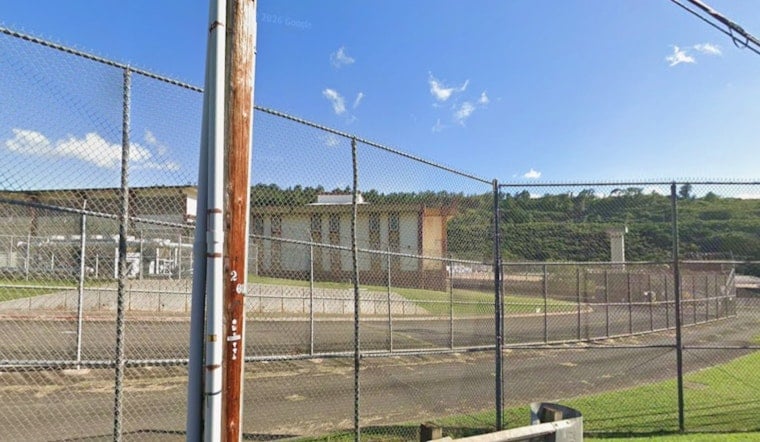
An inmate at Halawa Correctional Facility has died after being assaulted behind bars, according to Hawaii corrections officials. Godwyn Foster, who also went by Denise Foster, was taken to a nearby hospital by ambulance following the attack and was later pronounced dead there. The exact time and date of the assault have not been released.
The death is being investigated jointly by the Honolulu Police Department, the Hawaii Department of Law Enforcement, and the Hawaii Department of Corrections and Rehabilitation, according to KITV Island News. DCR has not disclosed when or how the assault occurred, and the exact cause and manner of Foster's death remain pending an autopsy by the Honolulu Medical Examiner's Office. Foster's next of kin have been notified of his death, the outlet reports.
Foster had a documented history with Oahu's criminal justice system dating back nearly two decades. Honolulu Police Department records from 2007 show he was previously sought on local arrest warrants tied to forgery and identity theft allegations, according to Honolulu Crimestoppers. More recently, in May 2023, Foster was sentenced to five years in prison after being convicted of unauthorized control of a propelled vehicle and theft, both class C felonies, per the same KITV report.
A Prison Already Under Scrutiny
Foster's death is the latest in a string of fatal incidents at Halawa, which has faced mounting scrutiny over safety and mortality inside its walls. In October 2024, inmate Raita Fukusaku was killed inside his cell after being assaulted and stabbed by a cellmate who was later ruled mentally competent to stand trial for murder, as reported by Newsday. That case echoes concerns Hoodline previously raised in its coverage of the accused tomahawk killer's competency ruling.
Mortality data compiled by Honolulu Civil Beat in February found that confirmed or suspected suicides accounted for eight of the 15 total deaths recorded at Halawa during 2024 and 2025. The Hawaii Correctional System Oversight Commission's 2025 annual report similarly found that Halawa accounted for 10 of the 18 total deaths in custody recorded across all state-operated and contracted correctional facilities that year, a disproportionate share for a single site.
Overcrowding and Staffing Pressures
As of February 2026, Halawa operated at roughly 80% of its 992-person operational bed capacity as Hawaii's primary medium-security facility for male prisoners, according to Hawaii Public Radio. The state has relied on an out-of-state transfer program since 1995 to manage overcrowding, currently housing roughly 800 male prisoners at Saguaro Correctional Center in Arizona, per the same report.
To combat persistent staffing shortages, the Hawaii Department of Corrections and Rehabilitation doubled its annual recruit classes to six and compressed basic training from 11 to eight weeks as of late 2025, the department announced. State officials have also moved to invest in medical infrastructure at Halawa, announcing plans in January for a $48 million medical and mental health unit, which Hoodline detailed in its report on the prison's mental health makeover.
Restructuring and Ongoing Oversight
The joint investigation by DCR and the Department of Law Enforcement stems partly from a 2024 legislative overhaul. On January 1, 2024, Hawaii formally established the Department of Corrections and Rehabilitation under Act 278, separating state facility operations and custody duties from law enforcement functions, according to Correctional News. That split is why both agencies are now involved in probing Foster's death alongside Honolulu police.
Foster's case adds to broader questions about reentry and recidivism among Hawaii's felony population. Research from the Hawaii Attorney General's Office cited in December 2023 found that over 50% of felons released on probation or parole in Hawaii were rearrested or had their supervision revoked within three years, a statistic Hawaii corrections leaders have cited when pushing for expanded programming. No further details about the circumstances of the assault on Foster, including whether staffing levels played any role, have been made public as the investigation continues.





