

























































A former member of the Maui Police Department has admitted to using unreasonable force in an encounter with an arrestee last year. On Jan. 6, 2024, Carlos Frate, 40, repeatedly deployed his Taser on the individual, who was not resisting arrest nor posing any danger, as per the plea agreement. Despite pleas for him to cease, Frate acknowledged in court that he was aware his actions were unjustified, and yet he persisted in using the Taser.
The outcome of this excessive use of force case was made public on Friday, with Frate pleading guilty to one count of violating federal civil rights. As reported by the Department of Justice, this plea comes as part of wider efforts to address police misconduct and ensure officers who betray public trust are held accountable for their actions. According to Acting U.S. Attorney Ken Sorenson for the District of Hawaii, while rare, any instance where an officer commits such abuses will result in prosecution to safeguard constitutional rights.
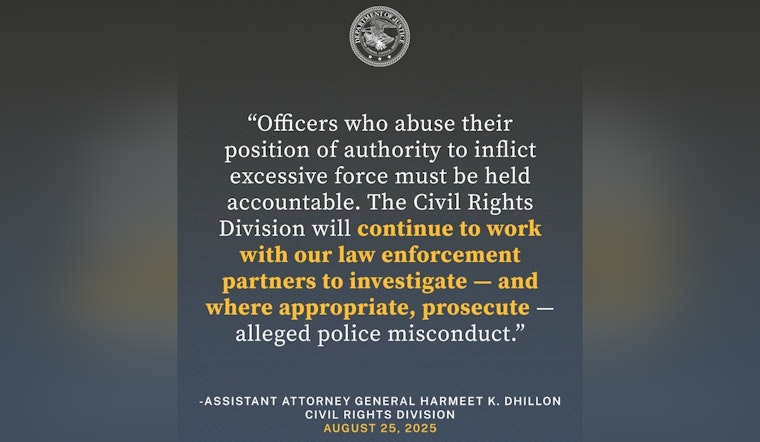
This admission has prompted reactions from various federal law enforcement officials. Assistant Attorney General Harmeet K. Dhillon of the Department of Justice Civil Rights Division stated, "Officers who abuse their position of authority to inflict excessive force must be held accountable." He emphasized the ongoing commitment to investigate and, where suitable, prosecute cases of police misconduct. On the other side of betraying public trust, David Porter, Special Agent in Charge of the FBI Honolulu Field Office, commented on the broader implications of such actions, saying that abuse of power by law enforcement officers not only violates individuals' civil rights but also erodes public confidence in our justice system.
Pending sentencing, Frate could face up to ten years in prison, with the decision set for Jan. 6, 2026, by U.S. District Judge Micah W. J. Smith, informed by advisory sentencing guidelines and various statutory factors. The FBI, continuing its oversight role, is handling the investigation based on a referral from the Maui Police Department, ensuring that those who violate federal law are subject to investigative scrutiny, regardless of their position.





