

























































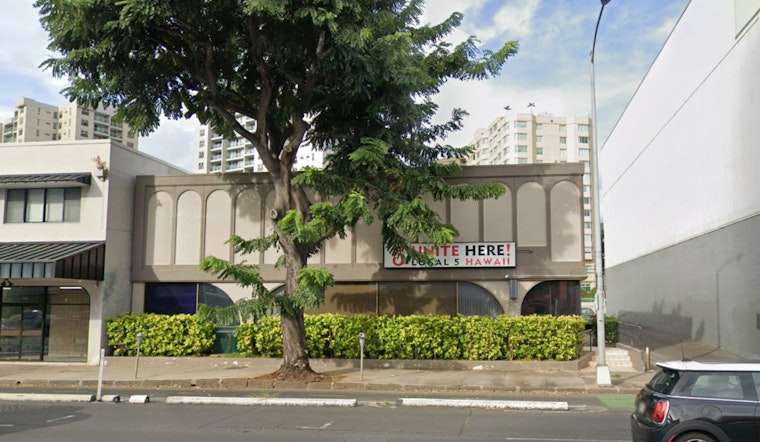
Hawaii's hospitality and healthcare sectors are bracing for another wave of labor negotiations as thousands of workers across multiple industries push for new contracts. The latest bargaining cycle involves hotel workers at properties including the Ilikai, healthcare workers at Kaiser Permanente, and food service staff at state airports.
According to Honolulu Star-Advertiser, this cycle covers contracts at five hotels, including the Ilikai, as well as at Kaiser Permanente, where contracts expire for some 2,000 Hawaii healthcare workers at the end of September, and for roughly 500 food service workers at HMSHost at airports statewide. UNITE HERE Local 5, which represents 10,000 workers across hospitality, healthcare and food service industries, is leading the charge.
Ilikai Workers Rally for 'Waikiki Standard'
The most visible action came Thursday when union representatives for about 60 workers at the Ilikai Hotel staged a rally seeking a new contract. Despite being the union's smallest bargaining unit at the property, these workers have become a focal point for broader industry standards. Front desk worker Richelle Rodero-Miyasato, who has worked at the hotel for 23 years, expressed frustration about the prolonged negotiations.
The Ilikai workers have been operating without a contract since June 2024, and they're demanding what's now called the "Waikiki Standard." This benchmark was established after Hilton Hawaiian Village workers struck for 40 days late last year, ultimately securing $10 hourly raises over four years for some positions. Properties including the Ala Moana Hotel, Ritz-Carlton Oahu, Turtle Bay Resort and the Modern Honolulu have achieved similar deals—but not the Ilikai.
Healthcare Workers Authorize Strike Action
Beyond the hotel sector, nearly 2,000 Local 5 Kaiser Permanente members have voted to authorize a strike with 93% approval, according to UNITE HERE Local 5. This authorization gives union leadership the power to call for work stoppages if necessary during contract negotiations. Local 5 members at Kaiser Permanente and Hale Nani Rehabilitation & Nursing Center have historically "set the highest standard for wages and benefits in Hawaii's healthcare industry."
The healthcare negotiations extend beyond Kaiser Permanente, with contract talks scheduled later this year at Hale Nani Rehabilitation & Nursing Center, where approximately 250 workers are represented by Local 5, as reported by Honolulu Star-Advertiser.
Airport Workers Demand Better Wages
The bargaining cycle also encompasses food service workers at Daniel K. Inouye International Airport, Lihue Airport and Kahului Airport. UNITE HERE Local 5 notes that HMSHost workers "are the first and last workers to encounter our guests and do the same work as a lot of our workers in the hotels and get paid so much less." Over 500 Local 5 members at HMSHost locations have been pushing for wage equity with their hotel counterparts.
The union emphasizes that airport workers "demand that One Job Should Be Enough in the sector that contributes significantly to Hawaii's largest industry." This represents a strategic expansion of Local 5's influence beyond traditional hotel properties into the broader tourism ecosystem.
Building on 2024 Victories
These current negotiations follow what many consider a watershed moment for Hawaii's labor movement. As detailed by Honolulu Star-Advertiser, when UNITE HERE Local 5 workers ratified the Hyatt Regency Waikiki Beach Resort & Spa contract in December, they settled the last contract of eight hotels where the union had authorized strikes in 2024.
Local 5 financial secretary-treasurer Cade Watanabe reported the union has already settled contracts for 1,398 hotel workers at four properties this year, including the Kahala Hotel & Resort in January, The Modern Honolulu in April, and the Ala Moana Hotel and Ritz-Carlton Oahu, Turtle Bay in May. These victories established the "Waikiki Standard" that other properties are now being measured against.
Strategic Timing and Industry Impact
The timing of these negotiations—spanning the busy summer tourist season and extending into fall—gives workers significant leverage. Tourism remains Hawaii's largest industry, and any potential disruptions during peak seasons carry substantial economic consequences. The union's approach demonstrates sophisticated coordination by simultaneously negotiating contracts across hotels, healthcare facilities, and airport concessions.
For workers like the Ilikai's Richelle Rodero-Miyasato, these negotiations represent more than wage increases—they're about achieving parity with industry standards. The outcomes of these multi-sector negotiations could reshape Hawaii's labor landscape and test whether the gains from 2024's historic strike wave can be sustained and expanded across the state's broader service economy.




