

























































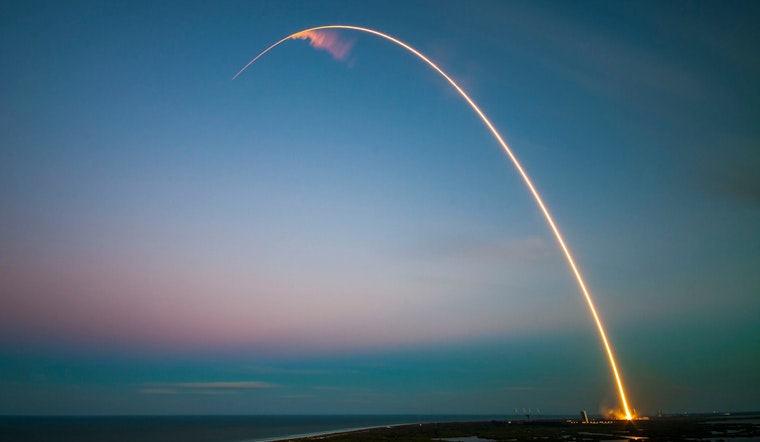
In the early morning hours of August 12, while most of Hawaii slept soundly, a team of University of Hawaii Community College students watched from thousands of miles away as their scientific experiment rocketed into space aboard a NASA sounding rocket. The achievement marked another milestone for local students reaching beyond Earth's atmosphere with their innovative research.
The Terrier-Improved Malemute rocket launched from NASA's Wallops Flight Facility in Virginia during the 6 a.m.-9 a.m. EDT window, carrying what became known as Project Imua Mission 14. According to the University of Hawaii News, this mission marked the fifth time that a UH Project Imua payload was launched into space, with the first launching from Wallops in 2015.
The collaboration brought together students from multiple UH Community College campuses, with Windward CC students designing the deployment system and power distribution while conducting data analysis. As reported by University of Hawaii News, the Honolulu CC team focused on designing video capture circuits and managing data handling for the mission.
Innovative Propulsion Research
The experiment centered on advancing propulsion technology through innovative means. According to NASA, the University of Hawaii Community Colleges' experiment launched a small sublimation rocket using camphor as propellant to measure its specific impulse, or efficiency, along with an electronic payload.
The Hawaiian students' work joined seven other experiments from institutions across the nation as part of the RockSat-X program. The rocket reached approximately 100 miles altitude before descending by parachute into the Atlantic Ocean for recovery, with NASA noting that the RockSat program "provides NASA-unique technical training and authentic, hands-on experiences that prepare students to enter the United States' aerospace industry."
Project Imua's Educational Mission
Project Imua, which means "to move forward" in Hawaiian, has become a cornerstone program for Hawaii's community college students interested in aerospace engineering. As detailed by the University of Hawaii System News, Project Imua is a faculty-student enterprise of multiple UH Community College campuses in affiliation with the Hawaii Space Grant Consortium that provides students with real-world, project-based learning opportunities.
The program's track record demonstrates growing sophistication over the years. In a 2022 mission, Windward CC students designed and built a camphor-powered sublimation rocket deployed at approximately 91 miles altitude, while the Honolulu CC team created camera systems and inertial measurement unit devices to monitor the rocket's motion.
Project Manager Joe Ciotti, a Windward CC professor, emphasized the program's broader impact in a statement to the University of Hawaii System News: "The hands-on, authentic research conducted by our UH Community College students challenges them to set their sights on lofty goals, while building the demanding skills required in high-tech, STEM careers."
Looking to the Future
The recovery of the payload from the Atlantic Ocean marks the beginning of the next phase as students analyze data collected during their experiment's brief but significant journey through space. The University of Hawaii System News reports that more Project Imua missions are scheduled to fly for UH's future rocket scientists, ensuring that Hawaii's students will continue reaching for the stars in the years to come.
This latest mission continues Hawaii's growing presence in space-related research and education, with the state expanding its aerospace capabilities through various initiatives including space weather monitoring stations and partnerships with national space agencies.




