

























































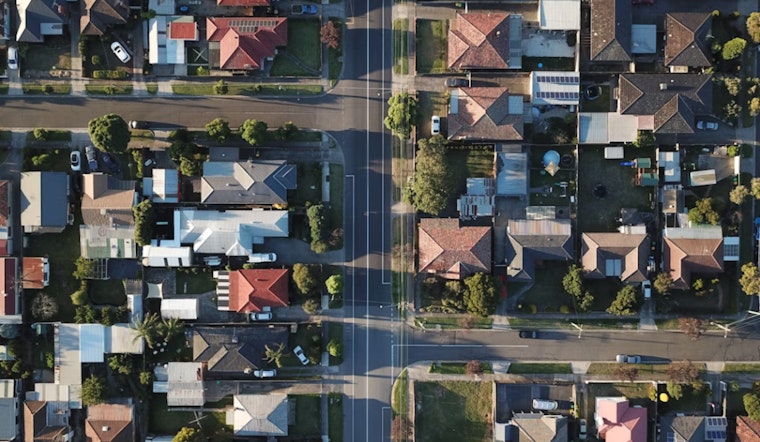
Honolulu's housing landscape is undergoing a fundamental transformation as city officials and developers grapple with an affordability crisis that has reached critical proportions. Despite ambitious legislative efforts and significant financial investments, the gap between housing supply and demand continues to widen, forcing residents and policymakers to reconsider what affordable housing truly means in one of America's most expensive markets.
Permitting Delays Stall Progress
According to Governing.com, a 2024 state law aimed to double accessory dwelling units across Hawaii, but Honolulu has added only 1,320 so far, about half the anticipated pace.
Honolulu Civil Beat reported that six years after Bill 7 promised to approve building permits within 90 days, projects have been permitted as slowly as other commercial developments. Mayor Rick Blangiardi acknowledged that some city permitting employees have "carried away with the power," highlighting systemic dysfunction within the regulatory framework.
The promise of streamlined approval processes has fallen short of expectations, creating bottlenecks that stifle development even as the need for housing grows more urgent. As reported by Civil Beat, permits have been approved for only 573 units, with construction underway on a 90-unit development on Pensacola Street.
Mixed Results from Affordable Housing Legislation
According to Civil Beat, only eight projects containing 229 units have been approved so far under Bill 7, though another 33 projects including 1,230 affordable units are pending. The legislation's definition of "affordable" has raised concerns about gentrification, as it allows developers to rent out studios for as much as $2,292 and two-bedroom apartments for $2,947 monthly. Bill 7 defines affordable housing as units within reach of people earning up to 100% of Honolulu's median income—$91,000 for individuals and $131,000 for families of four.
Transit-Oriented Development Initiatives
The city's approach increasingly focuses on transit-oriented development as a solution to both housing shortages and traffic congestion. As outlined by the Office of the Mayor, the City acquired the 3.8-acre Iwilei Center property for $51.5 million in January 2024, situated adjacent to the future Kūwili Skyline station. The site is slated for transformation into a high-density, mixed-use community delivering 500-700 housing units, including affordable options, alongside commercial and community spaces.
The City is also seeking development partners for a major project on Kapolei Parkway, described by the Mayor's office as an underutilized parcel surrounded by schools, parks, healthcare services, and retail establishments. This represents a shift toward integrated community development that goes beyond traditional apartment complexes to create walkable neighborhoods with mixed-income housing.
State Investment Shows Mixed Results
As reported by Civil Beat, two years ago the state made a record investment in affordable rental housing, with results that are both both promising and concerning. Following the record appropriation, $320 million went to develop about 2,000 apartment units around the state, from Hilo to Kihei to Kaka'ako. Despite this significant funding push, developers still face substantial obstacles ranging from permitting delays to supply chain issues in a state that imports most building materials.
Human-Scale Development Alternative
Urban planning experts have advocated for a different approach that prioritizes human-scale communities over high-rise towers. According to Civil Beat, rather than sprawling single-family subdivisions or tall towers, a high-density, low-rise approach would better serve livable cities. This model implements building heights between four to 12 stories with six to 12 apartments per floor and densities of 45 to 85 dwelling units per acre.
Honolulu’s housing transformation reflects national trends related to affordability, development, and community preservation. Upcoming efforts focus on addressing housing demand while incorporating sustainable, walkable design and accommodating growth through planning and permitting processes.





