

























































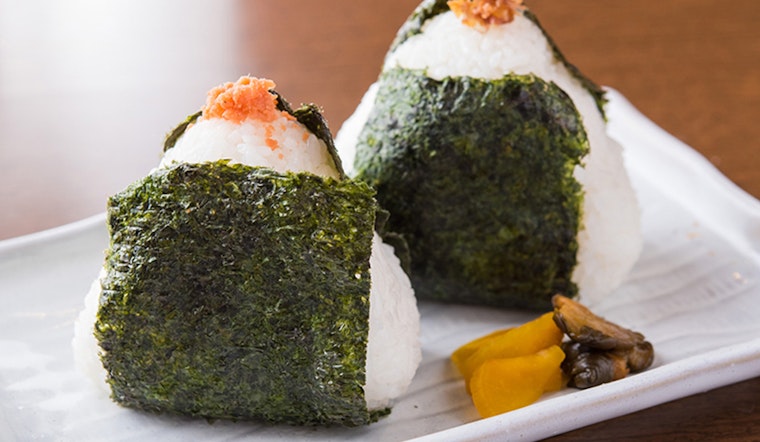
Downtown's lunch crowd has discovered a new obsession tucked between the high-rises on Alakea Street, where lines of office workers snake out the door of a compact storefront that's transforming how locals think about the humble rice ball. The scene reflects a broader evolution in Honolulu's musubi landscape that's been quietly unfolding across the city, elevating what was once considered a quick convenience store snack into an art form worthy of dedicated counter service and premium ingredients.
A New Wave
At the recently opened Onigiri Onibe, a Fukuoka chain focusing on premium rice and toppings, according to HONOLULU Magazine. The shop opened in July 2025 in the former Ma'Ona Musubi space at 921 Alakea Street, representing a new wave of Japanese musubi specialists bringing authentic techniques to Honolulu's already diverse rice ball scene. HONOLULU Magazine reports the location offers 45 varieties of rice balls as well as grab-and-go musubi, bento and side dishes.
What sets Onigiri Onibe apart isn't just the variety—it's the made-to-order approach that has created both excitement and operational challenges. As detailed by HONOLULU Magazine, early adopters have been experimenting with premium fillings like kakuni (braised pork belly, $3.25) and the mentaiko mayo onigiri (also $3.25). Last week, there was a sign advising that average wait times after placing an order were 15 minutes for made-to-order musubi, longer for larger orders and those with sides such as miso soup.
Craft Musubi Movement Takes Hold
The premium approach isn't limited to Japanese imports. According to HONOLULU Magazine, Gohan opened on November 1 in the Interstate Building at 1314 S. King Street in Makiki. Its made-to-order musubi approach has positioned it as Honolulu's first craft musubi bar. For the full experience, dining at the bar at Gohan is necessary, where cooks start with fluffy, aromatic and slightly sweet Tsuyahime rice steamed in one of five induction rice cookers that line a wall of the kitchen.
The theater of watching skilled cooks form each rice ball by hand has transformed the humble musubi into a dining experience rather than just sustenance. As noted by HONOLULU Magazine, this is when locals learned what makes a musubi great—the careful attention to technique and premium ingredients that elevate the simple rice ball.
The Veterans Hold Their Ground
While new players grab headlines, established operators continue evolving alongside the market. According to HONOLULU Magazine, Manabu and Fumiyo Asaoka opened what was known as Mana Bu's in 2008, making them the OG musubi folks in Honolulu. Although they've explored third-party operators in the past, they returned to oversee operations in 2020 and increased the shop's offerings and output. Mana Musubi is also the only musubi shop with staff in chef coats, which demonstrates their commitment to premium onigiri.
Similarly, Musubi Café Iyasume represents another established player adapting to changing expectations. With up to seven locations at one time across the island, from Kāhala to Ala Moana, they offer the most options and best prices while maintaining fairly consistent quality across all locations.
The Windward Side Finds Its Voice
Beyond the urban core, specialty shops are carving out niches with unique approaches. Per HONOLULU Magazine, Got'z Grindz at 45-726 Kamehameha Highway in Kāne'ohe is worth the drive for their myriad musubi choices. The shop serves over 40 varieties with prices ranging from $1.95 to $5.25 each, making it a destination for musubi enthusiasts willing to navigate Windward traffic for the ideal rice-to-topping ratio.
Cultural Evolution at Rice Ball Speed
The recent developments signal more than just new restaurant openings—they represent a maturing of musubi culture in Honolulu. As outlined by HONOLULU Magazine, musubi are so popular that O'ahu is home to 11 shops dedicated to the craft of pairing freshly cooked rice with salty, pickled and sweet toppings and wrapping them up in nori. What's particularly noteworthy is how these new establishments are introducing techniques and ingredients that were previously difficult to find locally.
The timing of this musubi renaissance isn't accidental. As reported by HONOLULU Magazine, editors picked 11 top categories plus 21 readers' choices to establish the best food and drinks on O'ahu this year. As Honolulu's food scene continues to evolve post-pandemic, the comfort and portability of musubi align perfectly with changing consumption patterns and heightened appreciation for artisanal approaches to familiar foods. For locals who remember when musubi meant grabbing a plastic-wrapped triangle from 7-Eleven's hot food case, the current scene represents both evolution and homecoming—a return to the handcrafted techniques that originally made musubi special, enhanced by global influences and local innovation.





