

























































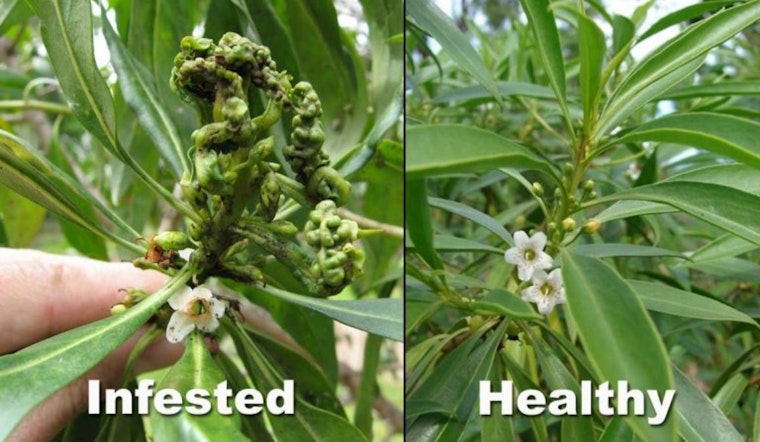
An invasive insect threat has newly arrived on the scenic shores of Kauaʻi, targeting the indigenous naio plants that dot the island. It's the Myoporum thrips, a nastily efficient leaf muncher now making its presence known in this corner of Hawaii. According to a recent press release by the Department of Land and Natural Resources Division of Forestry and Wildlife (DOFAW), these critters have been raising havoc on native vegetation, a situation first flagged through a citizen report on the website 643pest.org. In the aftermath, agencies have been swift to canvas the island's naio, finding infestation hot spots.
Armed with an action plan since 2013, DOFAW, together with Kauaʻi Invasive Species Committee (KISC) and Hawaiʻi Department of Agriculture and Biosecurity (HDAB), have rallied forces in response to the detection. The collective goal? To corral this uninvited guest before it spreads uncontrollably. "Having that plan in place helped the agencies respond quickly in this case, and partners are hopeful that the rapid response may lead to successful containment or even island-wide eradication," Rob Hauff, a forest health coordinator with DOFAW, mentioned in the same press release.
Myoporum thrips are no strangers to the Hawaiian Islands, having previously crashed Hawaii Island's party in 2009 and gatecrashing Oʻahu in 2018, with a recent soiree on Molokaʻi in 2024. These tiny invaders are a textbook case of unwanted globalization, hitching rides on anything from plant shipments to unsuspecting travelers. The threat isn't to be taken lightly, with the naio tree's health at serious risk. These plants are not only landscape beauties but also a haven for local insects and pollinators that depend on them.
The creepy-crawly culprits themselves cause a series of botanical nightmares, inducing ugly leaf curl, scarring, and other disfigurements that can be the plant's death knell. "Myoporum thrips feed on Myoporum leaf tissue and cause leaf curl, scarring, deformation or abnormal growths that damage the naio and can potentially lead to its death," Hauff highlighted, as reported by the DOFAW. Do you suspect thrips in your local foliage? You're urged to make a pest report swiftly via 643pest.org—an early notification can mean a world of difference for containment efforts.





