

























































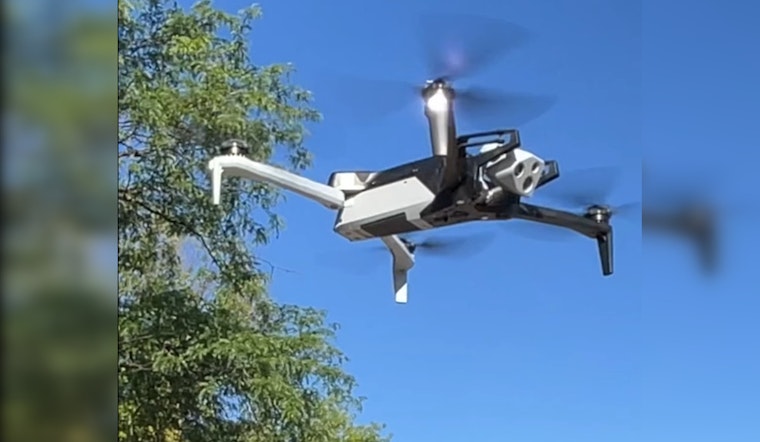
The city of Minnetonka has taken a significant leap into the future of public safety by launching the state's first Drones as First Responder (DFR) program. In an effort to enhance the efficiency and safety of its emergency response, the Minnetonka Fire Department will partner with the Minnetonka Police Department to integrate unmanned aerial systems into its operations, a groundbreaking move that relies on technology to provide real-time support during emergency incidents.
Chief of Police, Scott Boerboom, explained the initiative's core objective in a straightforward and measured tone, reinforcing the department's commitment to innovation. "We are committed to using every tool available to make our community safer, and this DFR program does exactly that," he told the City of Minnetonka's news site. The drones will be responsible for arriving first on the scene of emergency calls and will operate from fixed Skydio docks scattered throughout the city. Drones stepping into such a role are a testament to Minnetonka’s progressive embrace of technology.
Indeed, the figures coming out of other cities where similar programs have been introduced are striking. The use of drones has brought down average response times by 2-5 minutes. In a significant 25% of calls, the aerial perspective from the drones proved sufficient to resolve incidents, negating the need for officers to put themselves in harm's way. The potential for improved assessment from a distance bodes well for keeping public servants out of immediate danger, pointing to a promising future where technology and human expertise operate in tandem for community safety.
But Minnetonka's foray into using drones for first response is one matched with caution and considerations for privacy. The department has set out strict policies to ensure that the drones are used in a transparent and respectful manner towards the privacy of its citizens. Flights of the drones will be restricted to calls that are public safety-related, as outlined by Minnesota state statute, and will not be used for random patrols or surveillance, which are not meant for spying on the public, yet all video feeds will be logged and subject to public scrutiny on a dashboard designed for anyone to audit. In essence, they are tools for safety, existing in the public domain for the public good, offering transparency and accountability in equal measure.



