

























































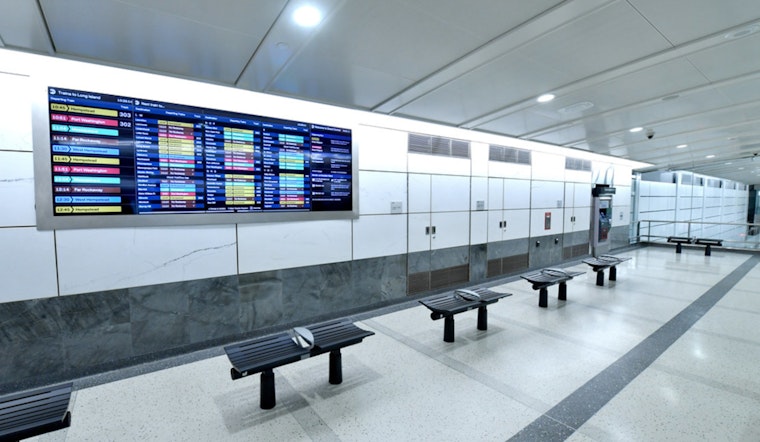
The Metropolitan Transportation Authority (MTA) has introduced additional benches designed to prevent lying down at Grand Central Madison, sparking further conversation around the issue of "hostile architecture" in public spaces. This term refers to design elements intended to deter certain behaviors in urban environments, such as sleeping on benches, as per report by Gothamist.
A total of 70 new bench seats have been installed at the train station's Long Island Rail Road (LIRR) mezzanine, designed exclusively for the use of ticketed LIRR customers, with a sitting limit set at 90 minutes. This move effectively doubles the number of seating options available in the station. However, some commuters feel that the provision is still inadequate, with calls for even more seating. "There should definitely be more," Jean Ryan, a CUNY worker, told The New York Post, particularly highlighting the need for those with mobility issues or chronic pain conditions.
These bench installations come as part of the MTA's response to growing ridership and after criticisms of the station's absence of seating when it first opened in 2023. According to Gothamist, each bench at Grand Central Madison features two seats separated by a curved handle, a design choice clearly aimed at preventing people from laying down. The discussion surrounding these urban design choices continues, with some experts arguing that enhanced security measures and expanded social services reduce the need for defensive architecture.
The discussion on seat design and availability is part of a larger conversation regarding the MTA's efforts to create welcoming and efficient public spaces. Despite concerns about the potential misuse of the seats by homeless individuals, the presence of dividing armrests appears to mitigate this issue according to customers. "The fact is, these places were burdened with tremendous problems, social problems of people living there, homelessness, dirt and decrepitude," Jon Ritter, a clinical professor of architecture and urbanism at NYU, told Gothamist.
In addition to seating improvements, efforts are in progress to bring more retail options to the station, aiming to foster a lively atmosphere similar to the historic Grand Central Terminal above. Shanifah Rieara, MTA Senior Advisor for Communications and Policy, expressed a positive outlook on the station’s development, stating, "We want Grand Central Madison to be a bustling terminal," while discussing plans for a new restaurant and additional retail offerings in an interview with The New York Post.



