

























































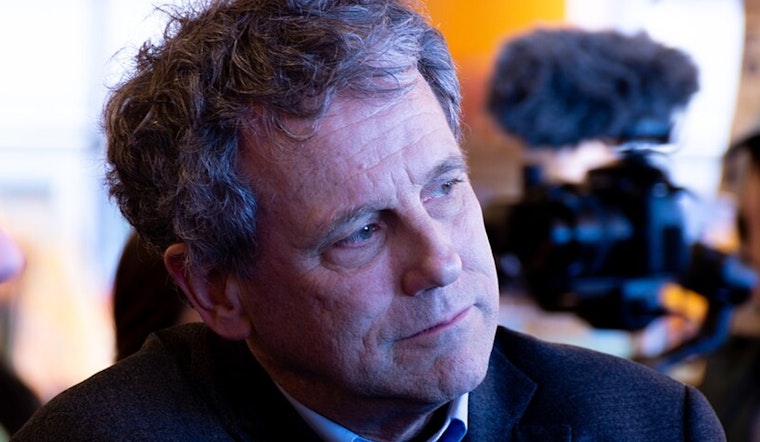
In a decisive stride toward reclamation of political influence, Sherrod Brown, the well-known Ohio Democrat, has pronounced his re-entry into the political fray, vying once again for a seat in the U.S. Senate, as reported by WBNS. His campaign, ignited amidst the backdrop of a tight midterm landscape, challenges incumbent Republican U.S. Sen. Jon Husted, bolstered by an endorsement from none other than President Donald Trump. Reaffirming his dedication, "Nobody in the Senate is speaking out for Ohio workers, nobody," Brown lamented, pressing his commitment to a pro-working-class agenda; this pledge emerged after the passage of a tax legislation that Brown criticizes for enriching the affluent at the expense of the vulnerable, according to an Associated Press interview.
While Brown, at 72, grasps at the chance to interrupt what he perceives as a "rigged system," the Democrats, too, recognize in him a significant contender to harness control of a chamber where they face an uphill battle; indeed alongside North Carolina's former Governor Roy Cooper, they solidify their ranks in anticipation of the midterms, this according to information gleaned by WBNS. Yet, it isn't just political strategists or high-level discussions like those with Senate Democratic Leader Chuck Schumer that feed Brown's resolve, but also the very people of Ohio who voice their desire for his political resurgence on the streets and in coffee shops, as per discussions with everyday Ohioans cited by WBNS and an interview highlighted by cleveland.com.
Speaking of the people who so crucially make up the fabric of a community, the residents of northwest Ohio carry another concern, one that pulsates through the streets they walk daily. "What are you waiting for, somebody to get killed?" Rose Hammond, an octogenarian, pleaded with local officials, calling their attention to the possibly hazardous 55 mph speed limit on Mitchaw Road. Her enduring entreaties for reconsideration were met with an unexpected technicality: according to age-old studies, the speed along her road, paired with the 85% rule calculation method, should actually register higher, not lower—a notion that now faces scrutiny under the weight of modern-day traffic dynamics and safety concerns, as documented by WLWT.
The antiquated 85% rule, once revered as a staple of road safety akin to a previously heralded tax break for the wealthy, is experiencing a moment of reassessment, states, with the federal government's soft urging, reevaluate and consider replacing the methodology that has long dictated speed limits, in an endeavor to formulate regulations more congruent with today's roads and the communities they run through, with this information provided by WLWT. In the pursuit of both political and literal paths that better serve the citizenry, figures like Brown and Hammond remind us that the voice of the people, and their persistent advocacy, still carry the power to shift course, even when faced with the inertia of longstanding systems.




.jpg)