

























































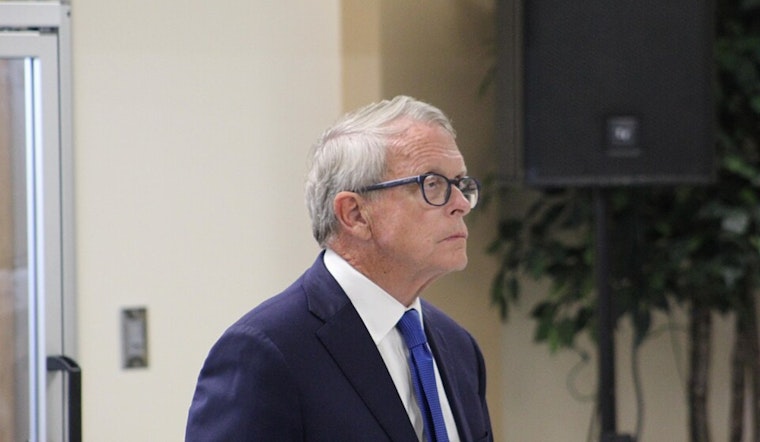
Ohio's commitment to the betterment of transportation within its smaller communities just got a significant fiscal push. Governor Mike DeWine, alongside ODOT Director Pamela Boratyn, presented a $12.7 million grant plan designated for advancing safety and infrastructure in cities with populations too small to fall under Metropolitan Planning Organization jurisdictions. According to an announcement from the Ohio Governor Mike DeWine's office, this financial injection is to be split amongst eight Ohio cities in need.
The distribution of funds, sprawling from ashtabula County's Geneva with $2 million dedicated to main street reconstruction to Wyandot County's Upper Sandusky handling pavement milling with $888,440, showcases a scope of various projects aimed at bolstering roadways for the safer travel and economic expansion. "Investing in local communities is critical in keeping Ohio's infrastructure strong and communities connected," Governor DeWine remarked, signaling a drive to enrich these smaller hubs through the Small City Program.
Amongst the projects, the emphasis appears to be on full-depth reconstruction, modernized traffic signals, and enhanced pedestrian safety measures. For instance, the town of Columbiana is set to undergo a significant upgrade to its traffic signals across the busy confluence of State Route 14, 46, and 164 with over $1.4 million allocated. Fremont, in Sandusky County, not only plans to revamp road surfaces but also improve pedestrian and cyclist conditions with $2 million from the grant. Director Boratyn stressed the critical nature of these grants, stating through Ohio Governor Mike DeWine's office, "Through these grants, we're providing critical funding to improve transportation infrastructure, enhance safety, and support economic growth."
Overall, the facilitated improvements seem to bridge the gap between maintaining historic city layouts and aligning them with modern traffic demands and public safety standards. For instance, Norwalk in Huron County is investing in the rehabilitation of a main street and even removing antiquated trolley tracks, a move that marks a stepping away from the nostalgia of yesteryears and towards a safer, more accommodative roadway system. Each project receiving a piece of the $12,664,094 total comes bolstered by the strategical use of Toll Revenue Credits aiming to minimize the financial load on the local administrations.





