

























































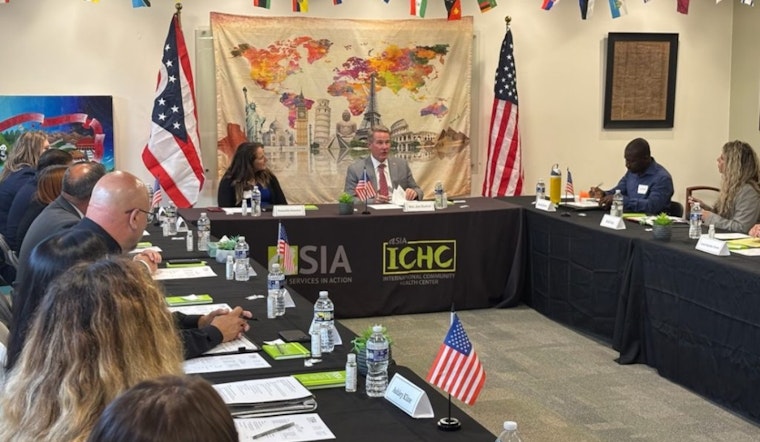
Ohio Senator Jon Husted is taking a hands-on approach to the problem of human trafficking in his state. Yesterday, Husted met with the Summit County Collaborative Against Human Trafficking and other local leaders in Akron to discuss strategies to better detect and prevent this crime. The group's dialogue centered on Husted's proposed Enhancing Detection of Human Trafficking Act, which seeks to empower the Department of Labor employees to effectively identify signs of human trafficking at workplaces.
During the meeting, as Senator Husted said in a statement obtained by U.S. Senate his office's press release, "Human trafficking exploits innocent children and adults within Ohio’s borders." He acknowledged the work done by local organizations and underscored his commitment to pass federal legislation that would provide law enforcement with the tools they need to better spot and thoroughly investigate human trafficking cases.
Husted's bipartisan bill, still in the legislative process, directs the Department of Labor to train its employees so that they can recognize the hallmarks of human trafficking. This training would then enable them to refer any suspected trafficking activities they encounter on job sites directly to law enforcement for further action.
Highlighting the magnitude of the issue, Husted pointed out in a recent appearance on Special Report with Bret Baier the progress that's been made, but also the challenges that lie ahead. Law enforcement reported 334 human trafficking cases involving 509 victims in Ohio in 2024. It's clear that the collaborative effort being pursued by Husted and local organizations like the Summit County Collaborative Against Human Trafficking aim to not just increase awareness, but also connect survivors with a strong network of resources and recovery services across Summit County.
The Summit County Collaborative Against Human Trafficking is dedicated to the task of educating the community on the signs and consequences of human trafficking. This is part of a broader effort to mobilize resources and support for those who have survived the ordeal, providing them with access to much-needed aid focused on their recovery and reintegration into society.





