

























































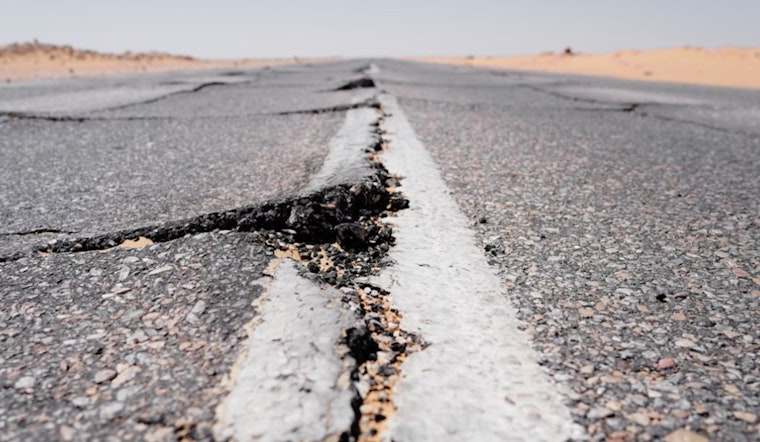
A magnitude 6.5 earthquake that rattled Indonesia's remote West Papua region today sparked Hawaii's Emergency Management Agency to quickly issue reassurances to island residents that no tsunami threat existed from the distant tremor.
According to MarketScreener, the earthquake struck Indonesia's West Papua region with seismic monitoring agencies initially reporting it as a 6.1 magnitude event before revising it upward to 6.5. The German Research Centre for Geosciences (GFZ) reported the quake occurred at a depth of 17 kilometers (10.56 miles).
The Pacific Tsunami Warning Center confirmed there was no tsunami threat from the earthquake, allowing Hawaii's Emergency Management Agency to quickly communicate the "all-clear" to residents, as per CNN. This rapid assessment reflects decades of refinement in Pacific-wide tsunami monitoring systems that have their roots in Hawaiian tragedy.
Indonesia's Seismic Reality
As Wikipedia notes, Indonesia has experienced more than 150 earthquakes with magnitude greater than 7 in the period from 1901-2019. Large numbers of earthquakes of smaller magnitude occur very regularly due to the meeting of major tectonic plates in the region.
According to The News Mill, Indonesia is located between two continental plates: the Sahul Shelf and the Sunda Plate, and between two oceanic plates: the Pacific Plate and the Philippine Sea Plate, making its tectonics very complex. There were no immediate reports of casualties or damage from this latest earthquake.
Hawaii's Advanced Warning System
Per NOAA, the agency's two tsunami warning centers are staffed 24 hours a day, 7 days a week. The Pacific Tsunami Warning Center, located on Ford Island, Hawaii, is one of two tsunami warning centers in the United States, covering Hawaii, Guam, American Samoa and the Northern Mariana Islands in the Pacific.
The swift no tsunami threat determination for Hawaii from today's Papua earthquake demonstrates how this sophisticated monitoring network now provides residents with rapid, accurate assessments of distant seismic events that once would have left Pacific communities in uncertainty for hours.
Recent Pacific Activity
This Papua earthquake comes just two weeks after a massive magnitude 8.8 earthquake off Russia's Kamchatka Peninsula triggered tsunami advisories across Hawaii, Alaska, Japan, and the U.S. West Coast in late July. As reported by CNN, the tsunami advisory for Hawaii was lifted after putting the region on high alert.
The Papua earthquake serves as another reminder of the Pacific Ring of Fire's constant activity and the importance of Hawaii's position within a comprehensive early warning system that has evolved into one of the world's most sophisticated natural hazard monitoring networks.





