

























































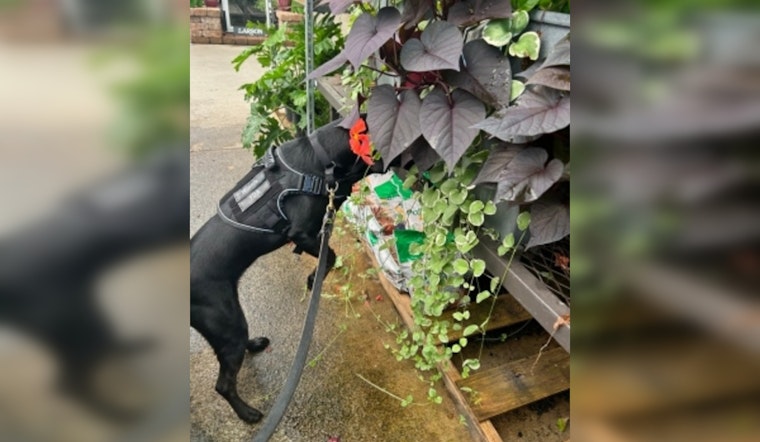
Tennessee is unleashing a new duo in the fight against invasive species, and these team members have four legs each. Meet Winnie and Marcel, a pair of detection dogs that are now part of the Tennessee Department of Agriculture's (TDA) efforts to sniff out the Spotted Lanternfly (SLF). According to a recent announcement from the TDA, these canines have been trained to detect the pest at all stages of its life cycle, providing a significant edge in protecting the state's nurseries and agriculture.
"These dogs are an efficient new tool to fight the spread of the spotted lanternfly,” Agriculture Commissioner Charlie Hatcher, D.V.M., said in a statement obtained by TDA. Winnie and Marcel completed their training at the USDA National Detector Dog Training Center in Georgia. Partnered with plant inspectors Mary Glover and Kyle Webb, their acute olfactory abilities have already proven beneficial by confirming the presence of SLF in areas where it had been reported but went unseen.
SLF, an invasive planthopper, poses a significant threat as it feeds on various plants including grapes, stone fruits, and hardwood trees. It reproduces prolifically, with the ability to lay eggs on virtually any hard surface, which exacerbates its spread across great distances when unwitting humans transport infested materials. TDA reports that the dogs' assignments also include pre-clearance inspections for nurseries, crucial for preventing the spread of the pest through plant shipments.
The TDA's news release outlines the importance of public awareness and participation in managing the SLF invasion. Residents are urged to photograph any sightings of the pest or egg masses and report them through the Protect Tennessee Forests website. The process involves destroying the pests by stomping on them, or the egg masses by smashing them, or treating with rubbing alcohol; and ensuring vehicles and other large equipment are free of the insects before transport.
In the ongoing battle against invasive species, the addition of Winnie and Marcel represents a creative and potentially highly effective approach by the TDA. Their work not only assists in the immediate detection of SLF but also helps to preserve the integrity of interstate and international trade by overseeing the phytosanitary condition of plant material entering Tennessee. With these dogs on the prowl, the state fortifies its defenses against a pest that could otherwise cause untold damage to its agricultural ecosystem.


